
Oct 31, 2026 · By Eliam Marrero Bernal
Pipe Torres: 94 mph, two boats and the signing a lawyer blocked
Turned away by Cuba's sports school, snubbed for the All-Star Game and kept from a Tampa Bay deal by his own lawyer, Yadier “Pipe” Torres never had a say in his career.
A lefty who throws 92 or 93 mph with command of his curveball and splitter doesn't develop on his own. Pipe Torres developed on his own. In any other country that would be an anecdote; in Cuba it was a sentence: he didn't come out of the school system, he belonged to nobody, and the system made him pay for it every chance it got.
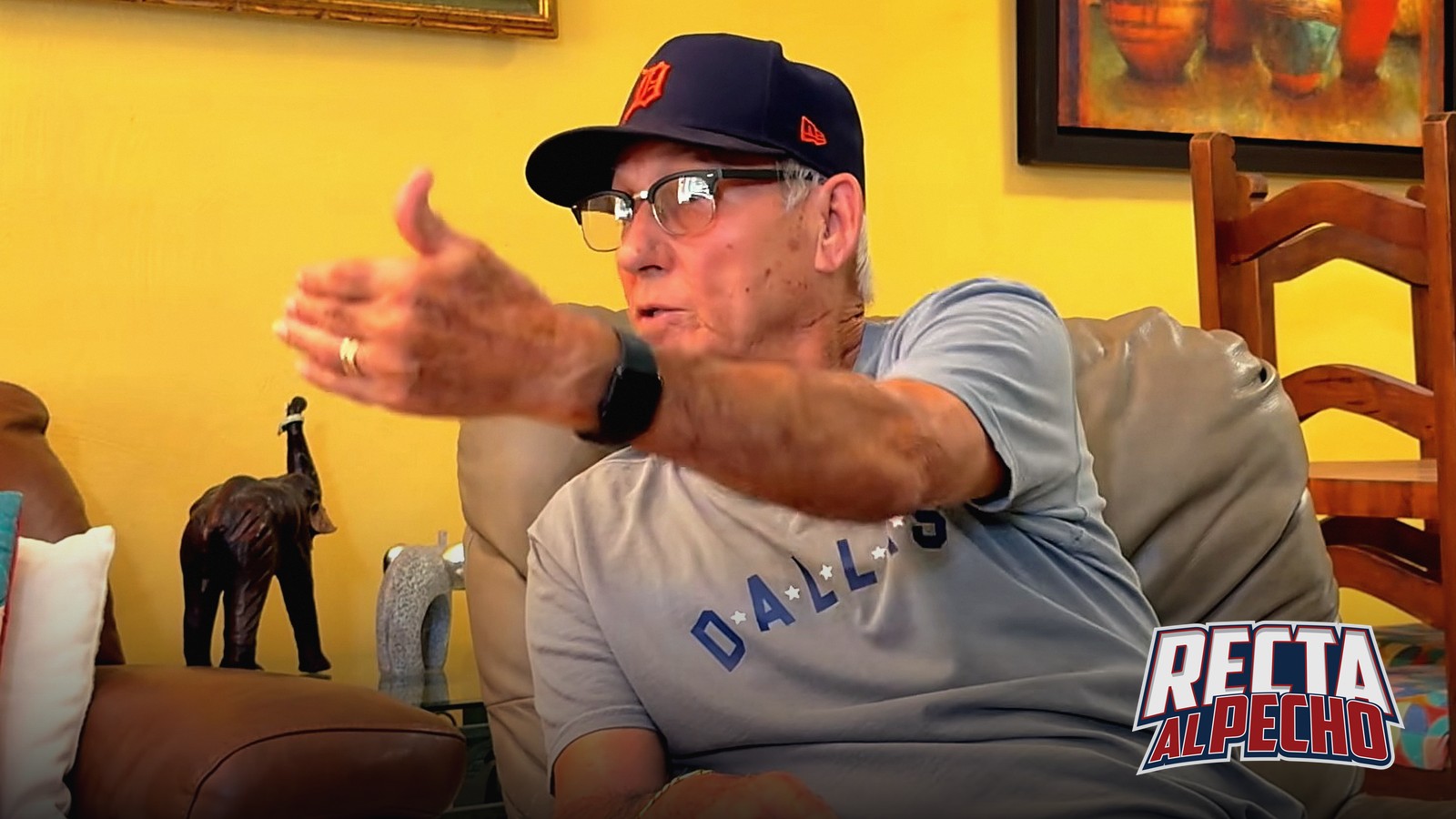
He told his story in Las Vegas, in the first episode recorded at the Recta Al Pecho studios, across from Eliam Marrero Bernal. He spoke without bitterness, in the tone of someone who has already done the math: a career with no spot at the sports school, a national team call that never came, a signature lost in an office and two crossings by sea.
No spot for him
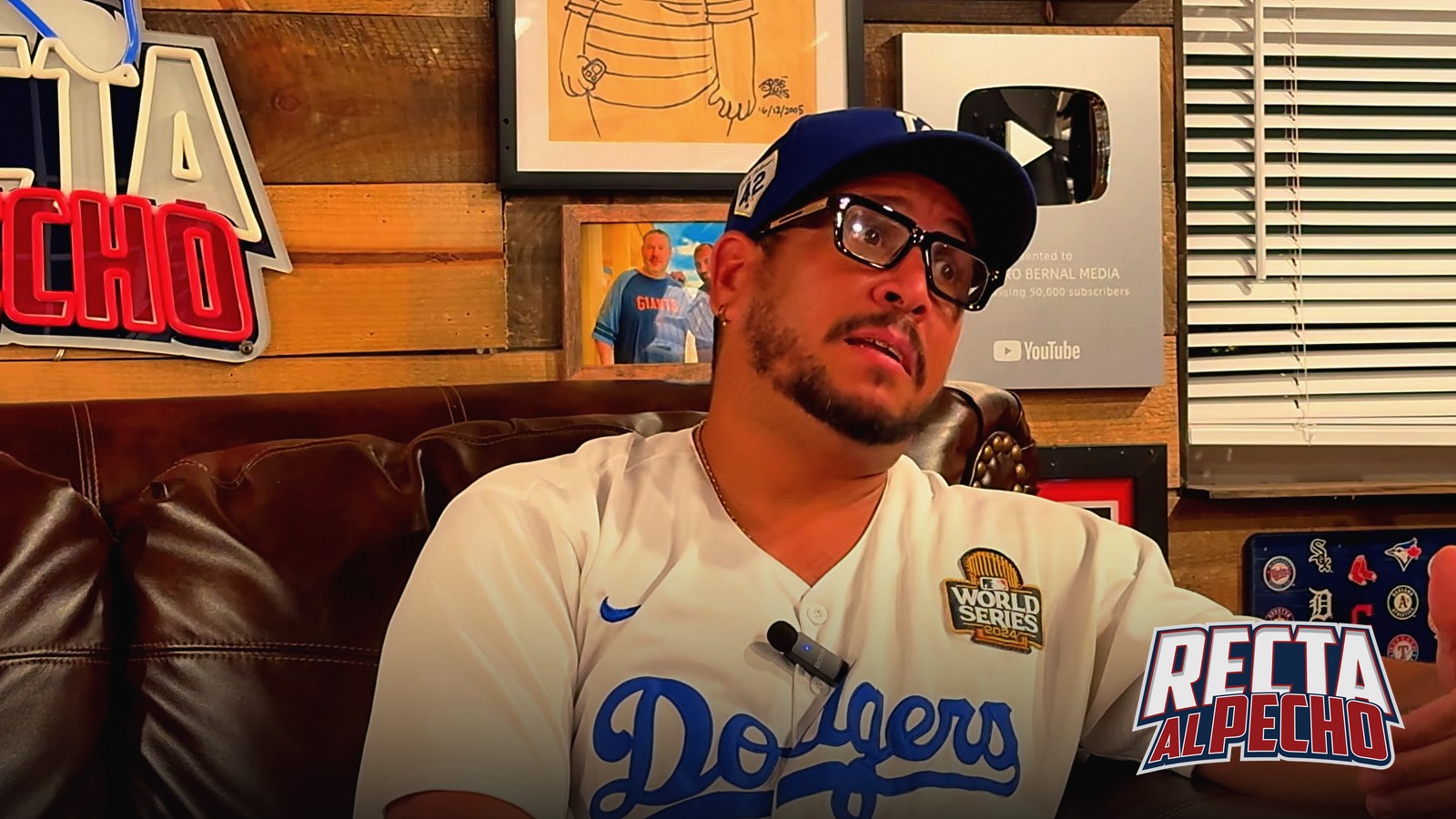
The nickname comes from his father, the team delegate for La Lisa. When the boy started playing, the ballplayers would say “that's Pipe's kid,” and the name stuck from the time he was twelve.
With that same father he went to try out for the EIDE, Cuba's provincial sports schools, at the Ciudad Deportiva. He threw a changeup, had velocity and found the strike zone. The coach acknowledged his ability and shut the door on him in the same sentence:
“He just told me: ‘No, there's no spot for you.’ And my dad told me: ‘All right, let's go. If you're going to be a ballplayer, you'll do it on the street.’”
And he did it on the street. He ran from San Agustín to the beach, played soccer for his legs and learned to pitch by watching games and loosening up his arm behind his house with Rolando Viera, an Industriales pitcher who lived next door. “I never had a school coach telling me: look, run like this, grip the ball like this,” he sums up. A first-category coach saw him throw and let him stay. In his first provincial game, against Marianao, he pitched nine innings and allowed a single hit.
The best pitcher on Metros who didn't go to the All-Star Game
In 2001, Anglada's first year at Industriales, he was called to the preselection. They kept him until the very end and didn't move him onto any team. He debuted with Metros in 2002. He caught Padilla's final year, when the team won 19 of 90, and then the Milián era. Everyone speaks badly of Milián; he doesn't: “I never had a yes or a no with him.” Under Milián he broke out. He was Metros' best pitcher and the leader in ERA; the reporters, he says, agreed. He was 21. He watched the All-Star Game from home.
“I watched the All-Star Game sitting at home, when I could have been there.”
His explanation is a description of how the spots were handed out: “I came out of nowhere.” Metros was the cellar-dweller, nobody went to bat for its players, and he hadn't come up through the EIDE, the mold the rosters were built from. “If you're not the elite, they don't push for you,” he says. For a 21-year-old, that hurt, “even if you don't want it to.”
Industriales, and the day he didn't want to pitch anymore
He arrived at Industriales as a reliever who doubled as an emergency starter. He caught Anglada's last year and Germán Mesa's first. From the first he remembers Julio Romero, the pitching coach who told him to keep his head up because he'd be pitching again the next day. From the second, a change he calls “abysmal.”
“I had differences with him, I stood up to him. When you have something to tell me, you tell me, but not in front of people, because it's like you're humiliating me.”
In his second year with Industriales, pitching in Cienfuegos, he decided that would be his last game. He took his gear home and a rumor spread that the lefty had left the country; they had to knock on his door to confirm he was lying in bed. He had no contacts and no plan. He had something else:
“I already played ball, I stayed in all the hotels, I already ate. What I want is to work to make money. Here I have no money, I have nothing.”
That's the line that dismantles the amateur fairy tale: an active Industriales pitcher with nothing to show for it beyond the hotel meals.
Two boats
He didn't go looking for a way out. A friend called him with the details, and on October 30, 2009, he left by boat for Cancún with Juan Carlos Linares, Jorge Rivero and other ballplayers. At sea the boat broke down and thirty people had to jump to another vessel as the waves pounded them. He was the last one: in front of him, a woman jumped and left her daughter on the boat, and when the girl went to jump, the boats drifted apart. Torres caught her in midair. “If I'm not there, that girl falls and gets killed.”
In Mexico some forty Cuban ballplayers were waiting. The person handling their papers “had a problem” and left them stranded; four of them got passports through a contact in Santo Domingo and moved on to the Dominican Republic. “That's a dark world,” he says, and names no names.
Six years later, by then settled in Santo Domingo, the mother of his son insisted on going on to the United States. He didn't want to. He ended up in a 23-foot yola, a small open boat, with seven or eight people and his son, who was a year and eight months old, hiding for a day on Saona Island pretending to be tourists so they could leave at night for Puerto Rico. A helicopter picked them up on Mona Island. Three days in detention, and then Miami. It was 2015.
“He cut me down”
Between the two boats lies the heart of this story. In the Dominican Republic he recovered from a back problem, trained at an academy in San Pedro de Macorís and reached the Toros with a 92-93 mph fastball, a cutter that came naturally, a curve and a splitter. With Licey they clocked him at 94. And a Tampa Bay scout started showing up at the field where he trained.
“He'd tell me: ‘You're going to sign with us.’ Well, I'm ready to sign. And one fine day he tells me: ‘I'm going to invite you to the Tampa academy so you can stay there.’ All you have to do is talk to the lawyer. And the lawyer told me no.”
He was under contract with that representative and didn't want to go around him: “I didn't want to behave badly.” As the conversation tells it, the lawyer was after more money. What he got was no signing at all. Torres sums it up in one phrase: “He cut me down.”
There was a second try: the best bullpen session of his life, the ball landing wherever the catcher set his mitt, and a pitching coach who would sign him “right now” if he had authorization. There was a third: while he was with Licey, a scout asked about the lefty, but by then he was with another lawyer “and in the end it was the same thing, everything was left up in the air.” That's when he walked away from baseball for the second time.
Years later he worked for that same lawyer, preparing young pitchers at the academies. The system that discarded him in Cuba and the business that discarded him abroad have one thing in common: both lived off his arm.
Nicaragua, Orlando, Las Vegas
Out of shape, he got talked into going to the Gigantes de Rivas in Nicaragua. At the airport he was welcomed with open arms by Germán Mesa, the same manager he had clashed with in Cuba.
“That team has an owner. Even with me he talked differently. Look, man, how things change.”
He lasted two outings; he asked for a ticket home himself because he wasn't going to fool anybody.
In the United States he lived in Orlando. Past thirty, he was offered a chance to play in Asia; he said no. “What I didn't do then, I'm not going to do now. I didn't make it, but I tried.” In 2020 he moved to Las Vegas, where he lives today, away from baseball. He has two sons, 21 and 12; the younger one prefers basketball. He'd like to teach what he learned in the Dominican Republic, but his English holds him back. When asked about the best play of his life, the answer isn't a game:
“The best play of my life was getting here. There's no other.”
Yadier Torres didn't turn down millions; he was never allowed to touch them. A coach denied him a spot at the school, a system denied him the All-Star Game and a lawyer denied him a contract, and in none of the three cases did he get a vote. That is the injustice: a 94-mph arm whose fate was always decided in an office he wasn't in.
The full interview with Yadier Torres is on the Recta Al Pecho YouTube channel.
Originally published in Spanish on Recta Al Pecho.