
Sep 11, 2026 · By Eliam Marrero Bernal
“The old-timers were better”: the myth that mistakes an empty league for a lesser generation
Cuba's stars of the 1980s never took the test against the world's best. Today's generation takes it every night in the majors, and it is passing with MVP awards.
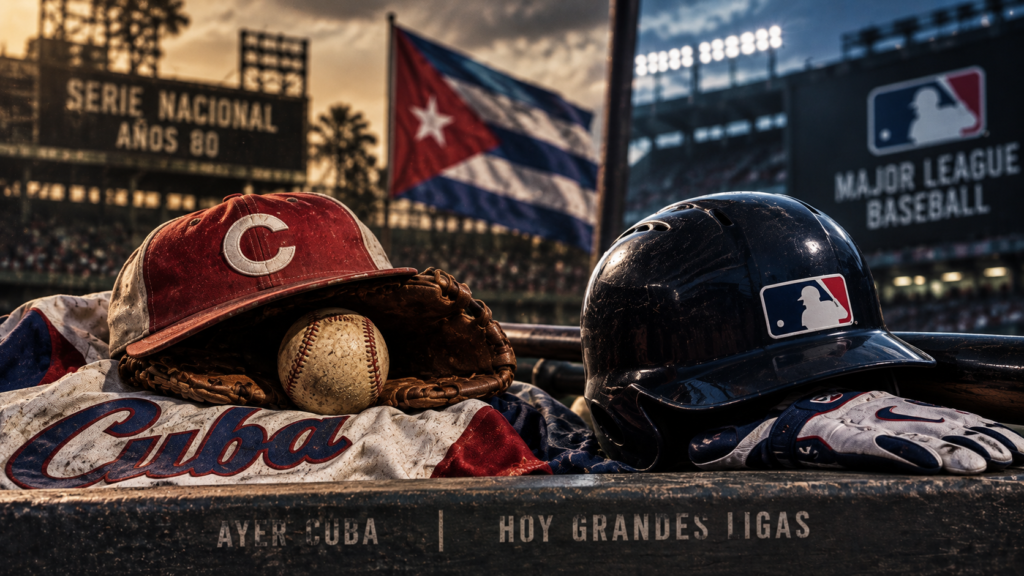
It's the official lament of every fan gathering: Cuban ballplayers of the '80s were better than today's.
And it rests on a perfect logical trap: comparing a generation that never took the test with a generation that takes it every day.
This is the series' final takedown: today's players aren't worse. They're the first ones who were actually handed the test.
And they're passing it with MVP awards.
By Eliam Marrero Bernal
The myth's reasoning is always the same, and it sounds airtight on the esquina caliente, the fans' debating corner: those '80s teams were powerhouses that won everything; look at today's National Series, it's embarrassing. The old-timers were better.
Even the protagonists of this series say so.
Juan Carlos Millán told us those teams “were better than today's” and that the game was played with more love.
Lázaro Valle recalls that anyone who got left off the preselection back then “today would have been the No. 1 pitcher on the C team.”
And on one point they're absolutely right, but not the one the myth thinks.
Because the argument falls into the trap of comparing two things that can't be compared: a league and a generation.
The league was better. The players weren't.
Let's concede what's true
Because it is: the National Series of the '80s was far superior to today's.
Two hundred elite athletes concentrated in a single league, training like professionals Monday through Saturday, with nobody leaving.
Four teams from that era would beat any of today's; Millán is mathematically right about that.
But why is today's National Series embarrassing?
Not because Cuba stopped producing ballplayers.
Because the ballplayers leave.
Today's league is a looted nursery: every talent that emerges leaves through the Dominican Republic at 16, 18, 20, headed for real baseball.
What's left in the island's stadiums is whatever hasn't left yet, plus the blackouts, the exodus of coaches and a country collapsing around the field.
Comparing the 1985 National Series with the 2026 edition doesn't compare generations of players: it compares a league that kept 100% of its talent by force with a league whose talent is escaping through every seam.
The right question isn't “where is the National Series better?” It's “where are the Cuban ballplayers of each era, and what did they prove where they played?”
And that's where the myth collapses, because the '80s players are in Cuba's trophy cases… and today's players are in the major leagues' trophy cases.
The test some never took and others pass every day
Let's remember what the golden generation actually proved, because this series has already audited it piece by piece: it dominated college students swinging aluminum bats, manufactured .400 averages with a lively ball, and when one of them did get to test himself against real professionals (Linares in Japan), the result was .246.
Their real greatness is unquestionable in its context; their superiority over everyone is an act of faith, because they never took the test.
And today's “inferior” generation?
That one takes the test every night, against the 750 best ballplayers on the planet, with a wooden bat, and this is its report card:
José Abreu: American League MVP and Rookie of the Year.
Yordan Álvarez: Rookie of the Year, World Series champion and one of the most feared hitters on the planet.
Jorge Soler: World Series MVP.
Yuli Gurriel: a major league batting title and a championship ring.
Aroldis Chapman: the fastest pitch ever recorded in MLB history and a World Series title.
Randy Arozarena: Rookie of the Year and holder of the record for home runs in a single postseason.
MVP awards. Batting titles. Historic velocity and postseason records. Rookies of the Year in bunches.
Not one player from the '80s generation has a single comparable line at the level where those lines mean something. Not because they lacked talent, but because they were never there.
And that is exactly the difference between the two generations:
One has a mythology; the other has a record.
You tell me which logic holds up: the generation whose best numbers were manufactured against college kids with aluminum bats was superior to the generation winning MVP awards against the best in the world?
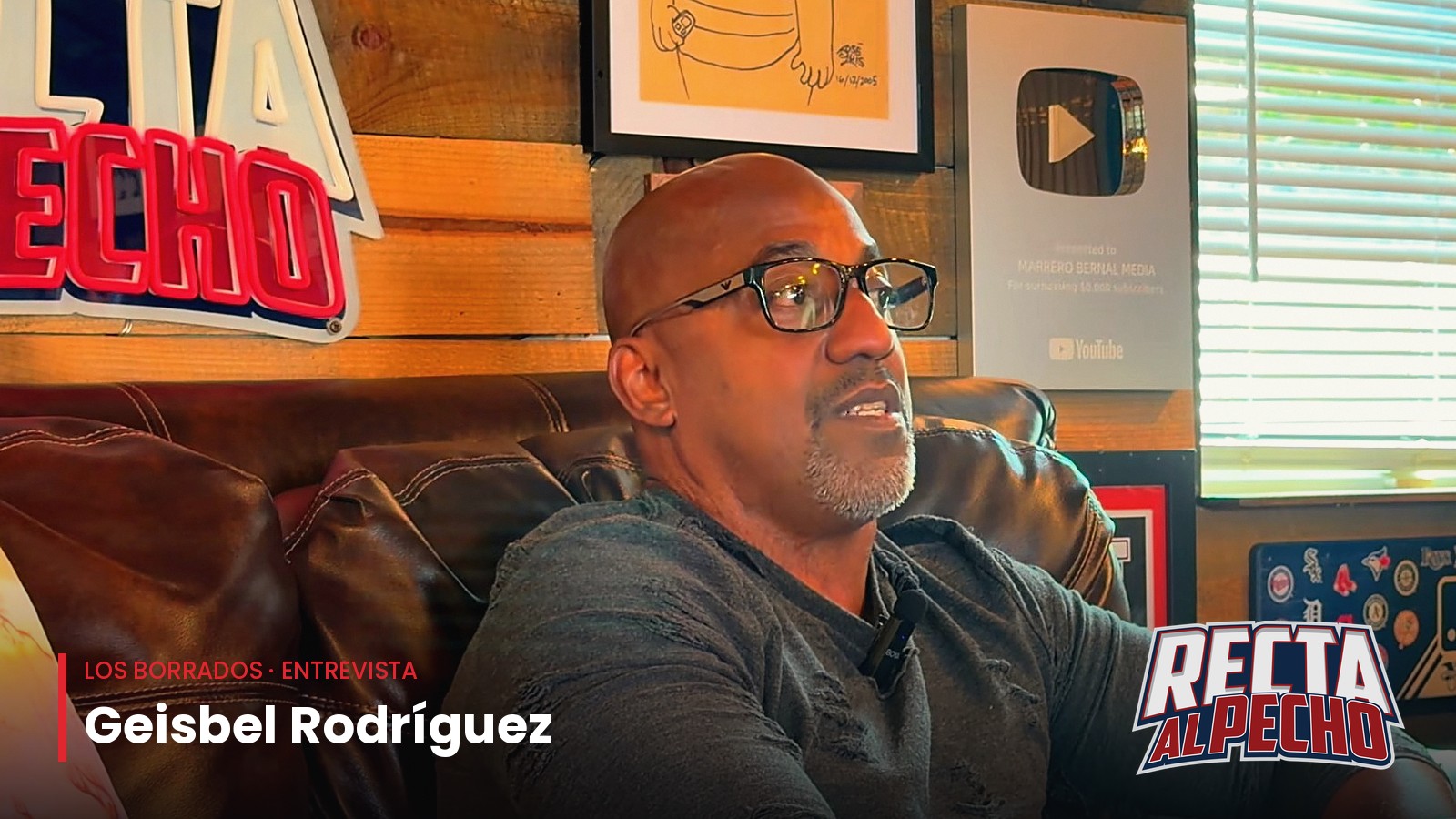
The interviews from this series (Millán, Valle, Scull, Anglada, Pierre and more) are available in full on our channel.
What we did lose, and it wasn't talent
Now, the myth exists because something real hurts behind it, and that has to be named with respect.
What fans miss about the '80s wasn't better players: it was a complete game.
Packed stadiums, full-blown rivalries, the country's 200 best spread across the same league, the love for the jersey Valle talks about, respect in the clubhouse, fundamentals polished by coaches who came out of the old professional game.
All of that was real, and all of it was lost. Not because today's kids are worse, but because the system that locked up the talent broke, and the talent did what water does: it found its level.
The level of Cuban talent today is called Houston, it's called Chicago, it's called the World Series.
Nostalgia mistakes the emptying of the league for the decline of the bloodline.
The bloodline is better than ever. It just doesn't play where nostalgia goes looking for it anymore.
Closing the series
Five myths went into this file and five came out dismantled:
- 1. The invincibles who beat college students.
- 2. The superstar who was never tested.
- 3. The Wizard who loses on every leaderboard.
- 4. The dead ball that flew.
- 5. The superior grandfathers.
Every one of these myths came out of the same factory: a closed league that measured itself for forty years, declared itself the best in the world, and sold that verdict to a people who had no information beyond what they were given.
It wasn't the players' fault. They brought the talent, the sweat and even the faith.
It was the system that needed to turn its hostages into gods, because a god doesn't need to leave, and a hostage does.
The best generation of Cuban ballplayers isn't the one from the '80s.
It's the one playing right now, tonight, against the best in the world, with the flag in their hearts even if it isn't on their uniforms, because the uniform with the flag stayed in the hands of the people who run the myth.
To the players of the '80s, all the love and all the memory.
To today's, something better: recognition.
This article closes our series on the myths of Cuban baseball: The myth of the invincibles, Linares or Gurriel?, The myth of Germán Mesa and The aluminum myth. The interviews cited are available in full on our YouTube channel.
Originally published in Spanish on Recta Al Pecho.