
Aug 25, 2026 · By Eliam Marrero Bernal
He took off his Team Cuba belt, handed it to a teammate and climbed a wall topped with broken glass
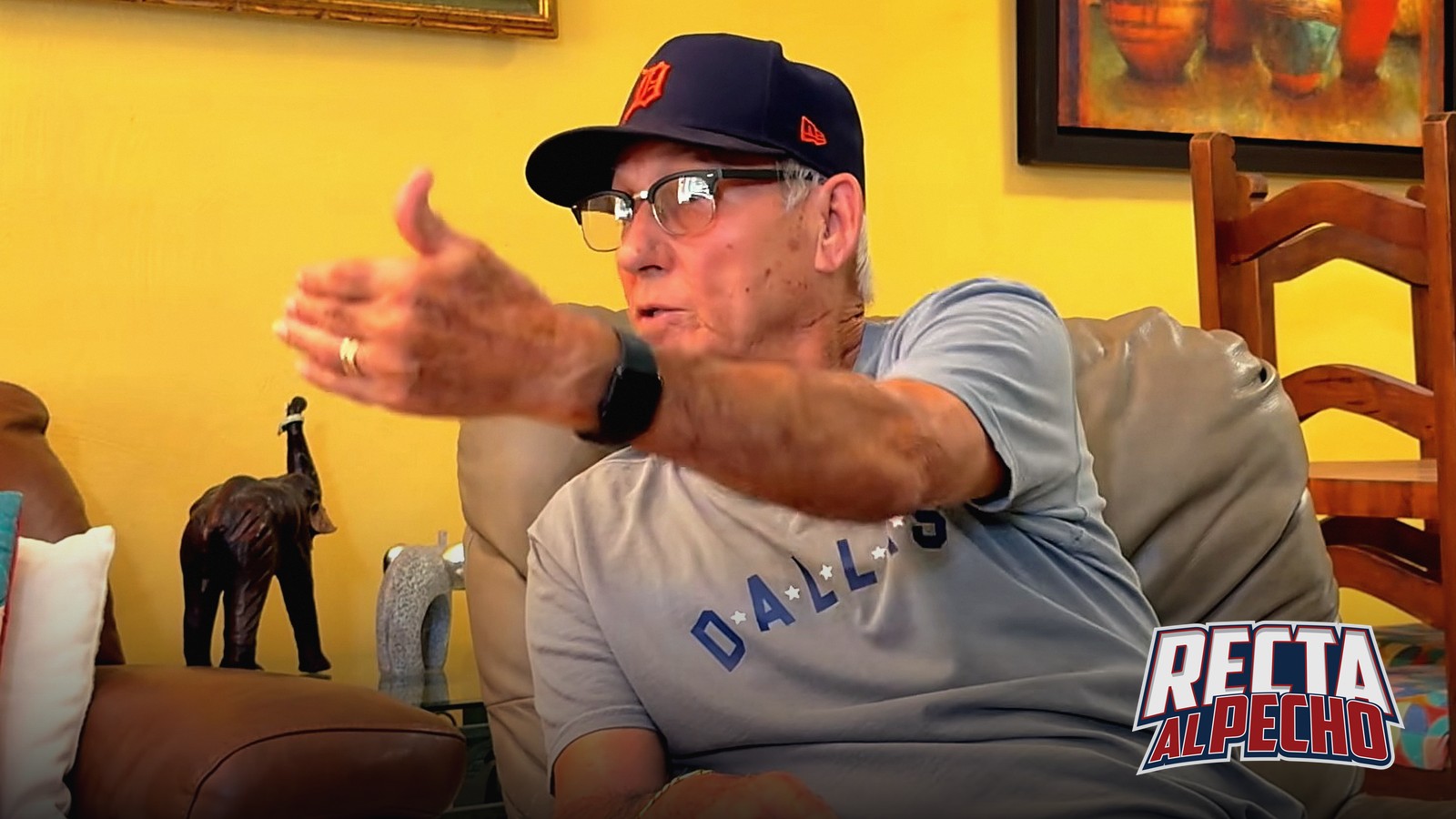
Osvaldo Fernández spent four months hiding in Curaçao, afraid State Security would send him back tied up. Before that he won 19 games in a season and rode to the ballpark hanging off a bus.
Osvaldo Fernández spent four months hiding in Curaçao, afraid that State Security would send him back tied up. Before that he won 19 games in a season and rode to pitch at the Latinoamericano hanging off the side of a bus. One day someone threw a stick at him from the street.
There is one object that sums up this entire story, and it isn’t a glove or a ball: it’s a blue belt.
Curaçao, 1993. Osvaldo Fernández is in his hotel room stuffing his things into a bag, in a hurry. A teammate walks in and asks what he’s doing.
—I’m leaving.
—What about your daughters?
“That’s exactly what I’m thinking about. My daughters.”
So he did the only thing he could think of. He took off his blue Team Cuba belt, put it in his teammate’s hand and said: Rafa, so you can keep it.
He walked out of the room and climbed a wall topped with broken glass.
The man who won 19 games and nobody remembers
Before telling the escape, we have to say who was escaping, because Cuba made sure he was forgotten.
Osvaldo Fernández was the best left-hander at the 1982 World Junior Championship in Barquisimeto, without having played a single Serie Nacional season yet. He was sixteen and they put him in among Pacheco, Kindelán and Vargas.
He owes being there to one man: Iván David, his coach, now deceased. He took him on as a kid who was an oddity — he threw left-handed and batted right-handed — and had him bat lefty too, where his swing came more naturally.
Then he told him the line that changed his trade: go pitch over there, let’s see. And when he was already working for the national commission, he was the one who pushed him onto the junior team before he had played a Serie Nacional.
“I’ve got a little lefty here — bring him over.”
“I have a lot to thank the late Iván for, because he was special with me. A tremendous coach.”
Then came everything else: world champion, Goodwill Games champion, Central American Games, the 1991 Pan American Games in Havana. He beat the United States team three times. He threw a no-hitter — he is the 31st pitcher in Cuban history to do it.
“The only thing I was missing was the Olympics.”
And there was a season when he went 19–5.
From that season, do you know what everyone talked about? One swing of the bat.
The double where he never touched first
That day they lost their designated hitter and Osvaldo — a pitcher — ended up batting cleanup. Sergio, the manager, looked at him:
—Do you know how to hit?
When he stepped into the box, the Latinoamericano erupted, because it had been years since people had seen a pitcher hit. The catcher told him he was going to strike him out in front of everybody. Osvaldo looked at him and told him to give it time.
He saw the fastball sign and lined it over the shortstop.
“I was laughing as I ran and I never touched first.”
He realized it at the end of the game, walking off, when an umpire — he thinks it was Mongo Bella — stopped him and said quietly: Hey, kid, you didn’t touch first, did you?
“And what were you going to call? Are you crazy, so they kill me here?”
Nineteen wins that season. Nobody talked about that.
Five years on the bench
Here is the waste he still can’t explain.
After the World Junior Championship they put him on Industriales. And they left him there for five years.
“They kept me at Industriales for five years for nothing. They’d send me out to pitch when the game was already lost, when they’d already gotten pounded. Nobody can become a pitcher like that.”
When they finally sent him to Metropolitanos — not because he asked, but because they wanted to get rid of him — he went 7–3. The next year, 12–5. Then they brought him back to Industriales, by now established.
“Those years stunted me.”
Capiró, or the math he did in silence
I asked him when he started thinking about leaving, and he didn’t talk to me about money or the big leagues. He talked to me about Armando Capiró.
“I’d look at Capiró, Team Cuba’s No. 3 hitter. I’d say: if this is Team Cuba’s No. 3 hitter, what’s waiting for me?”
There it is, the math every athlete in Cuba does sooner or later: look at the one who already retired and see what he was left with.
That math is done in silence, because — as he told me — the walls have ears. Not even his roommate knew.
Barcelona 1992
The final push came from the Federation.
On the road to the Barcelona Olympics, five players still had to be cut. Osvaldo was among the five starting pitchers. He was at ease.
He found out downstairs, at the restaurant in his building, from a friend who went up to his apartment and came back with a long face.
“Damn, I think they cut you.”
Upstairs, in the apartment, were his father and the whole family, all with the same face.
I asked him if he knows who made that decision. He doesn’t. And then he told me the most disarming line of the whole conversation:
“In the end what they did was a favor. If I knew who it was, I’d buy him a car.”
Watch the full interview with Osvaldo Fernández.
The bridge that swung open
They sent him to the B team. Curaçao. He pitched his five innings and the team was heading on to Colombia afterward.
Osvaldo decided he wasn’t going to wait for Colombia.
Heading back to the hotel he crossed paths with Luis Álvarez Estrada, who was walking out with a small suitcase in his hand.
—Luis, where are you going?
—I’m leaving.
—Hold on, I’m leaving too.
After the belt and the glass-topped wall came another wall. And then the road.
“It was like a movie.”
And then came something that only happens in real life, because no screenwriter would write it: Curaçao has a floating bridge that swings open when a cruise ship comes in or goes out. Luis had ended up on the other side. The bridge opened.
Thirty minutes standing there, with the forty dollars of per diem they’d been given, watching cars go by and thinking any one of them might be coming for them.
“Well, let’s sit down over there and have a beer.”
When they finally crossed and reached the house where they were going to be hidden, nobody was there. They had to climb in through the bathroom window.
Four months in hiding
This is where the story stops being an adventure.
Cuban ships docked in Curaçao. The Cuban government operated there, with people inside immigration.
“Ship captains had stayed there and they’d sent them back tied up.”
Tied up. That’s the word. It wasn’t an exile fantasy: it was what happened.
Osvaldo spent three or four months shut inside that house. When he started going out, he passed himself off as Puerto Rican.
“We were scared because of that.”
The lawyer who got them out was Gustavo Domínguez, the same one who had handled the case of René Arocha, the very first of them all.
Reaching him wasn’t a coincidence either: the person who made the contact from Miami was a Cuban journalist, now deceased, Sarvelio del Valle, one of the voices who for years called baseball broadcasts beamed toward the island.
“He contacts us through a journalist who was here, who has passed away, Sarvelio del Valle. That’s how I get to Gustavo.”
And the way out wasn’t by plane: it was on a sailboat, hugging the island, all the way to Puerto Rico.
The statue of Martí
In Puerto Rico they were taken to a place called Casa Cuba. And there Osvaldo experienced the shock that strikes me as the most revealing of the whole interview.
“When we walked into Casa Cuba, what’s the first thing I see? A statue of Martí.”
In Cuba they had taught him one thing about José Martí: that what Martí promised, Fidel delivered. Finding Martí in exile, in a house of Cubans who had left, scrambled his whole map.
And then came the paranoia, which he describes without shame:
“You’d sit in restaurants, a cop would walk by and you…”
The thirty thousand dollars he turned down
He couldn’t come in as a free agent. He had to go through a college to enter the draft, and that’s where the Seattle Mariners signed him.
He rose fast: Class A, then Double-A with 12 wins and the Southern League strikeout lead, then Triple-A.
And then came the 1995 strike. They asked him whether he would pitch as a replacement player. They offered him thirty thousand dollars in cash.
A man who months earlier had crossed the Caribbean on a sailboat said no. And the reason wasn’t political:
“If you have me around, what is Griffey going to think, what is Álex Rodríguez going to think when they see me?”
He was going to start on Opening Day. The strike was settled, they sent him down to Triple-A, and that’s where he got hurt. Tommy John.
“We got here already burned out.”
Because in Cuba he threw 160 pitches a game, and on the third day he asked for the ball again. In the United States they sat him down and explained something nobody had ever told him:
“We pay you to start games. You did your job. Get ready for the next five days.”
The stick
And now the detail that left me speechless, and that explains better than any speech what a ballplayer was worth in that Cuba.
In the building where Osvaldo lived also lived the official in charge of looking after high-performance athletes. That man would ride the elevator with him without saying good morning, get into his Lada and drive off to the Ciudad Deportiva.
Osvaldo stayed at the bus stop, waiting for the bus.
“One day I’m going to pitch at the Latino hanging off the bus. Pitching that day. And the people going to see me were riding along with me.”
Hanging off the outside, the way everyone rode. And that day someone threw a stick from the street.
“It hit me on the right shoulder. Lucky it hit me there. If they get my left one, they ruin me.”
His throwing arm. By inches.
Team Cuba’s pitcher was hanging off a bus on his way to pitch at the Latinoamericano, and the man in charge of looking after him drove past in his car without offering him a seat.
“We’ll be very close”
Osvaldo has been back to Cuba about six times. The first was while playing in Mexico for the Sultanes de Monterrey, where — the way the world turns — the coach was Eduardo Velo, the same man who had taught him the screwball in Cuba.
Velo took him to the embassy and in three days he had a passport.
What happened when he landed in Havana he tells better than I can. An officer in a guayabera was waiting for him at the foot of the plane.
—Osvaldo Fernández, how are you?
“How do you think I’m going to be, after so many years without coming to my country?”
—Welcome to Cuba. Any problem you have, we’ll be very close. Very close.
And they were.
“Two girls, two women, two guys, anybody could be sitting there. I’d get up to go to the restaurant bathroom and they’d go right behind me.”
A father who never woke up
His mother died watching one of his games. She had a heart attack from the excitement while he was pitching against Isla de la Juventud. A week later he threw the no-hitter.
“I know my mom was there with me.”
His father he did bring to Miami for a visit. And there something happened that captures an entire Cuban generation:
“My dad was still dreaming that I was part of the apparatus, that I was here on a mission.”
Osvaldo would send him off to chat with the old men in the neighborhood so he could keep busy. His father came back saying those people were always talking badly about Fidel.
“And who’s going to speak well of him here, Papi? You’re in Miami.”
The old man died the following year.
Fidel until five in the morning
When they beat the United States, they were taken straight from the airport to the Central Committee. And they stayed there until the early morning.
“He’d start talking to you until five in the morning: about whether he threw the curve, that screwball, back when he pitched.”
And Osvaldo, sitting there, silent, thought to himself a line he never said out loud, and says now:
“If with nothing but straight fastballs you’ve got the people going hungry — what happens if you throw a curve?”
The only regret
He has turned sixty. He hasn’t had a drink in seven years, because of his blood pressure. I asked him, as I ask everyone, whether he regrets anything.
“Not doing it sooner.”
And he added the explanation, the same one Yadel Martí, Jorge Soler and all the others have given me, each in their own words:
“We lived blind.”
Rafa kept the blue belt, in a hotel room in Curaçao, more than thirty years ago.
Everything else — the wall, the glass, the bridge that swung open, the four months in hiding, the sailboat — was done by a man who already knew that in his country, even if he beat the Americans three times, he would keep going to the ballpark hanging off a bus.
Interview conducted by Eliam Marrero Bernal for Recta Al Pecho. Osvaldo Fernández’s statements are taken verbatim from the recorded conversation, available in full on our YouTube channel.
Originally published in Spanish on Recta Al Pecho.