
Aug 9, 2026 · By Eliam Marrero Bernal
Linares or Gurriel? The Myth of the Superstar Who Was Never Tested — and the Champion Who Was
Omar Linares ruled Cuba's National Series, but the claim he'd have been an MLB superstar never got tested. Agent Carlos Pérez and the numbers weigh him against Yuli Gurriel.
Omar Linares is the best player the Serie Nacional —Cuba's National Series— ever produced, and that is not up for debate. What is up for debate is the other thing: the certainty, repeated like dogma, that he would have been a major league superstar.
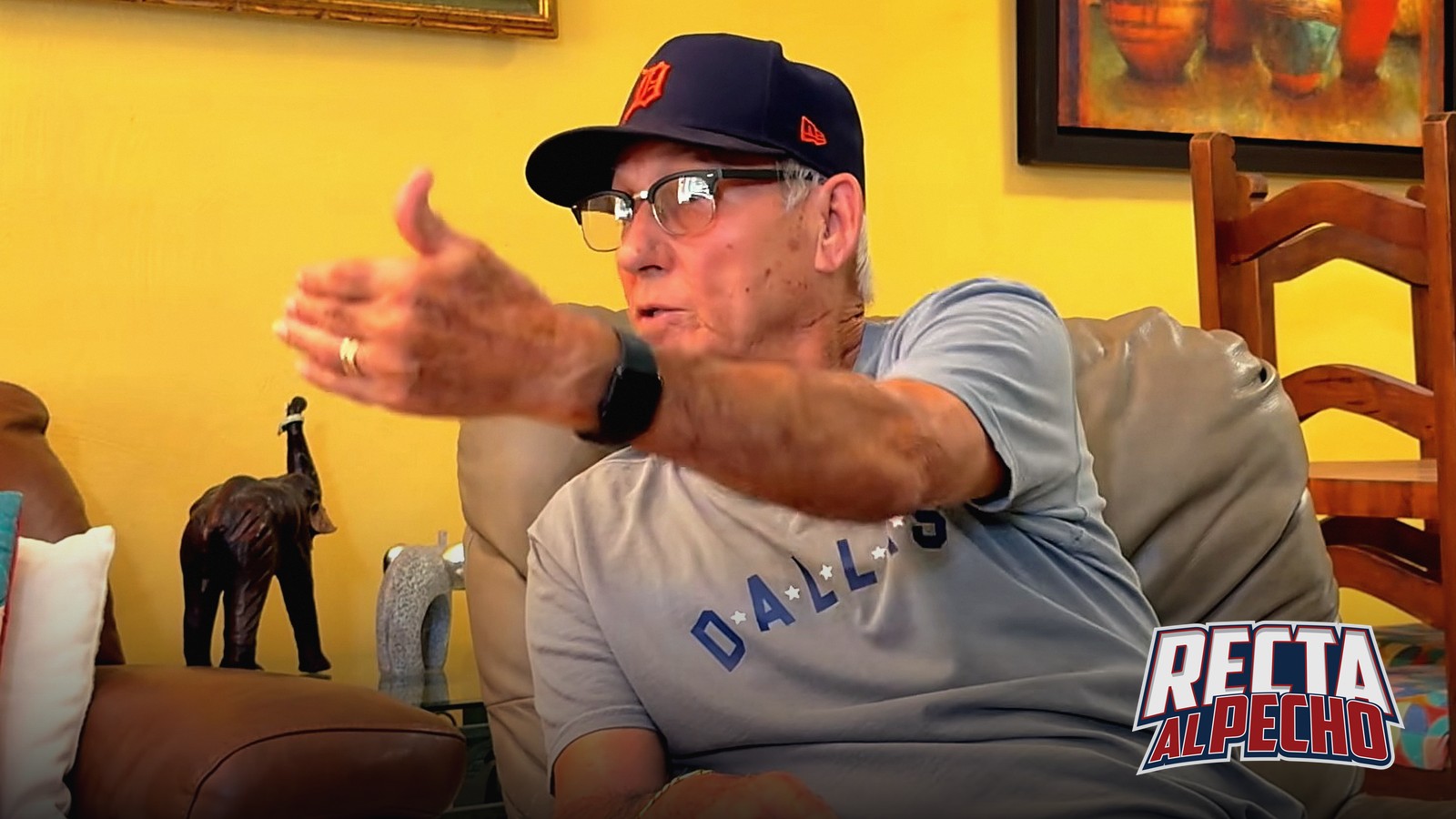
I sat down with Carlos Pérez —a baseball agent who has taken players all the way to the majors— to put that dogma on the table. And the numbers did the rest.
By Eliam Marrero Bernal
I asked Carlos Pérez the question exactly the way the fans ask it: would Omar Linares have been a superstar in the major leagues?
His answer was that of a man who makes his living evaluating ballplayers, not loving them:
“I'll answer you the way I answer a lot of people. The Cuban national team, when they were young, they all would have signed. All of them. Now —whether they'd make it to the major leagues, that's something else.”
There it is, in two sentences, the distinction the myth never makes: signing is talent; getting there and staying there is a different sport.
And he added the part no fan wants to hear:
“I can't say all those players were big leaguers. I can't do it.”
What nobody disputes
Let's start by giving El Niño what belongs to El Niño, because this article isn't here to tear him down —it's here to tear down the dogma that was hung on him.
In Cuba, Linares was a statistical deity: fifteen consecutive seasons above .300, seven above .400, and a lifetime average of .368 with more than 400 home runs.
I'm an Industriales fan, and when that man came up to hit against us, all you could do was pray the home run wouldn't hurt too much.
His class, his elegance and his bearing are beyond any debate.
The debate is something else: whether dominating that league proved he would dominate the best league in the world.
And for that, you have to talk about the tool that doesn't show up in the photos.
The tool you can't see from the stands
The gospel of scouting talks about five tools: hitting, hitting for power, running, fielding, throwing.
Linares, they say, had them all —and that's probably true.
But there's one tool that decides more careers than the other five combined, and it's the only one you can't measure by watching a man destroy the pitching in his own league: the head.
The ability to adapt —to the wooden bat, to pitching that doesn't forgive, to daily failure, to the discipline of an organization, to the loneliness of a foreign country.
Carlos Pérez sums it up with brutal arithmetic, learned over decades of watching talent sink:
“To get there, play and stay in the major leagues you need 30% quality and 70% luck. A lot of players arrive with very good quality, but they don't adapt. There are players here who haven't made it to the majors because of their attitude.”
Want proof that five tools guarantee nothing? This channel interviewed it: Rusney Castillo.
Textbook five tools, $72.5 million from the Red Sox —one of the largest international contracts in history— and a major league career that didn't produce what it cost.
The talent was there; what failed was everything else, which is exactly what no amateur world championship can measure.
That tool —the decisive one— Linares never had a place to prove.
And where the test did start to show itself, this was the result.
Japan: the only test, and what it said
In 2002, with the government's permission, Linares signed with the Chunichi Dragons. It was his only contact with real professional baseball.
The result, over 132 games spread across three seasons: a .246 average, 11 home runs and 61 RBIs —with 113 strikeouts in 349 at-bats: one strikeout every three trips to the plate.
And this is where the buts arrive, always the same ones: he was old, he was tired, he was hurt.
He was 34, that's true. But there's one fact that buries that excuse for good:
That same year, 2002, in Cuba, Linares hit .386 with a .641 slugging percentage for the Pinar del Río Vegueros —rates higher even than those of his own career.
The same man. The same body. The same season.
.386 against Cuban pitching; .246 against Japanese pitching.
If the problem had been age, he would have hit poorly on both sides. He hit like a god on one and like a bench player on the other. What changed wasn't the man: it was the level.
And in case the age excuse is still breathing, the second burial is named Yuli Gurriel: he won the major league batting title —in the best league on the planet— at 37. Three years older than Linares was in Japan.
Old isn't the guy who can't: old is the excuse.
Gurriel: the one who went and did it
Against Linares's incomplete record stands the closed case of Yulieski Gurriel, and Carlos Pérez laid it out with the logic of a syllogism:
“Yulieski Gurriel was batting champion in Cuba, looked very good in Japan, was batting champion in the major leagues and has a championship ring. What's the best baseball in the world? The major leagues. If he won the batting title there, right off the bat you've eliminated a whole lot of people from Cuba.”
Go over the whole ladder, because it isn't missing a single rung: he dominated the Serie Nacional, like Linares. He shone in Japan, where Linares failed. And then he climbed the rung Linares never set foot on: a batting title in the big leagues and a World Series ring.
Every level they put in front of him, he passed.
That's not barbershop opinion. That's an empirical record.
One spent his whole life speculating about what he would have done; the other went and did it.
“So-and-so said”: we went looking for the sources
And what does the dogma camp lean on? On the folklore of quotes: that a scout said this, that the Yankees offered $40 million, that Robin Ventura declared he was the best he'd ever seen.
Before publishing this article we did the work the fans never do: we went looking for those sources in the record.
This is what we found.
The legendary offers are apocryphal —and we're not the ones saying it. Linares's official biography at SABR (the Society for American Baseball Research) says most of those stories were probably apocryphal: the famous rumor of the Yankees offering $40 million doesn't appear verified in any press record, and neither does Toronto's supposed $100 million for the Linares-Kindelán package.
And it closes with the phrase that defines the entire file: major league scouts “fantasized privately” about Linares, rather than going on the record publicly.
Private fantasies. Not a report, not a signed evaluation, not a name.
The real Robin Ventura quote deflates the myth all by itself. We looked up what Ventura actually said, in 1992, four years after facing Linares:
“He could definitely play here.”
That was it.
Not “the best I've ever seen,” not “a sure superstar”: he could play here.
An opponent's compliment certifying roster-level ability —which the folklore kept fattening up until it turned it into a coronation.
And even taking it at face value, the distinction almost nobody makes still stands: a player's opinion is not a scout's evaluation. They are different trades, and the myth mixes them up on purpose, because a player's praise thrills and a scout's report disappoints.
The only evaluation with a first and last name attached… is Cuban.
Do you know what the only signed quote from that era is, calling Linares the best in the world with all the tools?
“Omar Linares is the best amateur player in the world. He has all the tools.”
The author? Jorge Fuentes —his own manager in Pinar del Río.
The founding evaluation of the myth didn't come from a major league scout: it came from the narrative of the island's coaches, evaluating their own jewel.
Everything else that circulates in the American press comes in the passive voice and with no owner: “was considered,” “many scouts saw him as” —stock phrasing that never cites a name, a team or a report.
That's the complete file on the sources: offers SABR declares unverified, a real Ventura quote that says far less than people make it say, and a single signed evaluation —from the manager who managed him.
And Cuba's internal pecking order, does that count as evidence?
Carlos Pérez has the counterexample that pulverizes it:
“Yunel Escobar was supposedly second-tier in Cuba, and he played here 11 seasons hitting .280.”
If the guy who was “second-tier” over there lasted eleven years in the majors, the Serie Nacional standings aren't a measuring instrument: they're a list of who hit best against pitching that wasn't big-league pitching.
In both directions.
Mijaín and Karelin
Carlos Pérez closed the conversation with an analogy that isn't about baseball, and it's the most honest one I've heard on this subject:
“Mijaín López is a monster —five Olympic gold medals. But he never ran into Alexander Karelin. I wanted to see that fight. That's why, for me, the greatest wrestler in history is named Karelin. And it's the same thing here with baseball.”
That is exactly the Linares case.
His greatness on his own turf is real and untouchable, like Mijaín's. But the crown of “he would have been a major league superstar” demands a fight that was never fought —and the only elimination bout he ever got into, Japan, he lost with a .246.
Meanwhile, the other contender stepped into the real ring, against the best in the world, and came out with the belt: batting title and ring.
El Niño was the king of his league, and nobody takes that away from him.
But the throne of “the best Cuban ballplayer” isn't inherited by acclamation of the fans: it's fought for where the best play.
One of the two went. And it wasn't Linares.
This article is part of our series on the myths of Cuban baseball. Also read: The myth of the invincibles: that Cuba didn't dominate the major leagues —it dominated college kids.
The full interview with Carlos Pérez is available on our YouTube channel. Data cited in this article come from NPB records, the Serie Nacional, the Omar Linares biography from the Society for American Baseball Research (SABR) and American sports press of the era.
Originally published in Spanish on Recta Al Pecho.