
Sep 4, 2026 · By Eliam Marrero Bernal
He has a place in Cooperstown. In Cuba, his pension buys a pack of chicken and an inhaler
Lázaro Valle threw a perfect game at 100 mph and beat a lineup of big leaguers. Months ago he nearly died of an asthma attack because he had no albuterol inhaler.
Lázaro Valle threw a perfect game firing 100 mph, beat a constellation of major leaguers, and El Duque calls him the best pitcher he saw in Cuba. His mark reached the Cuban baseball section of the museum in Cooperstown. And a few months ago he nearly died of an asthma attack because he didn't have an albuterol inhaler.
Let's start with the two ends of this story, because the distance between them is the whole article.
One end is in Cooperstown, New York. In the Baseball Hall of Fame museum, the cathedral of the sport, there is a space dedicated to Cuban baseball, and Lázaro Valle is present there. Not as an inducted member of the Hall, an honor reserved for major leaguers, but as part of the memory the museum keeps of our island's baseball. The arm from Old Havana made it, in its own way, to the place where the history of this sport is kept.
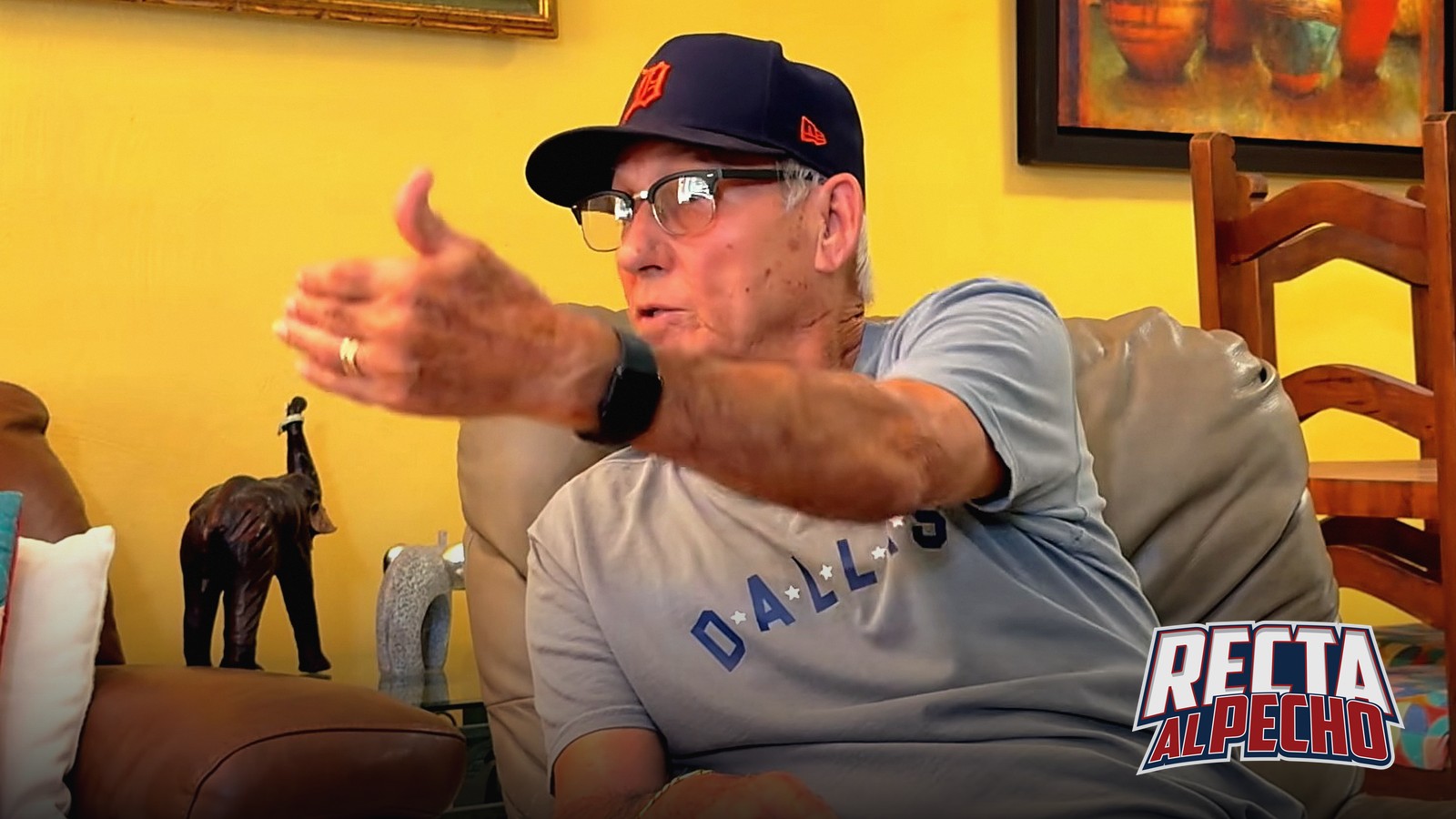
The other end is in Habana del Este, in the house where we interviewed him. And he describes it himself, without anyone asking, pulling the inhaler from his pocket and holding it up to the camera:
“I'm a chronic asthmatic. Here it is, look, I can't go anywhere without this. About eight or nine months ago I went into respiratory arrest because I didn't have an albuterol inhaler, and it got ugly.”
The man whose memory is preserved in Cooperstown nearly died for lack of a little device that costs 2,500 pesos on the street.
“Right now I'm making almost 6,000 pesos, which is for the Olympic medal. What does it cover? A pack of chicken and an albuterol. It doesn't go any further.”
The pitcher who hated pitching
The first thing to know about Lázaro Valle is that he never wanted to be a pitcher.
“I'll say it honestly and I'll keep saying it: I always hated pitching. I never knew I was going to be the pitcher I became.”
He wanted to hit. He admired Muñoz, Capiró, Agustín Marquetti, who later became his teammate. But he had an arm that wasn't normal, and his own teammates, among them a certain René Arocha, pushed him: kid, get in there and pitch and let's see what happens.
Pedro Chávez gave him the chance.
Here's what happened: in one of his first big outings, against a Las Villas team that featured Cheíto, Muñoz and Olivera (“those guys were savages, capable of climbing right up over the fence”), he struck out ten.
“And from then on came the peak of my sports career.”
The day of 101 mph
Puerto Rico, 1989. Víctor Mesa needles him before the game: you haven't thrown even one perfect game this year. Jorge Fuentes gives him a heads-up: tomorrow you're going against South Korea, one of the best offensive teams in the tournament.
What came out of that arm that afternoon still sounds like a tall tale:
“That day I never dropped below 95 mph. I threw three or four pitches at 100, and two at 101. And the slider never dropped below 89, 90, up to 92.6.”
The numbers have a first-rate witness: René Arocha was behind home plate with the radar gun, calling them out.
And he tells the end of the perfect game with an honesty no pitcher ever admits to:
“In the last inning I went out to pitch and said: I'm going to throw it right down the middle, because I can't take this tension anymore. I threw the fastball, they hit a grounder back to the mound, I fielded it, and it was a perfect game. A very hard game, because you think: you're throwing a perfect game, but that's almost impossible.”
“97 mph is the same here as there”
In 1993, Team Cuba faced the San Juan Senators, a roster loaded with major leaguers, including Javy López, freshly named rookie of the year. Valle got the start, and before the game an ESPN reporter asked him the obligatory condescending question: how does it feel, as an amateur player, to face a constellation of MLB stars?
Valle's answer deserves to be cast in bronze:
“I have a lot of respect for those players. But 97 mph is the same in the United States, in MLB and here.”
He left the game ahead 3-2. When it was over, the professionals came over to shake his hand.
And the trip also gave him three encounters he describes like someone showing off a treasure: El Gran Combo playing at the stadium, and the next day a photo with Celia Cruz and Tito Puente.
“I killed three birds with one stone.”
The 28 days
The biggest moment of his career wasn't the perfect game. It was a ball he kissed.
1996. His father went into critical condition on the very day Valle was supposed to start a playoff game. El Duque pitched in his place. Valle buried his father, after going 31 hours without sleep, and his wife Margarita told him the words he repeats with gratitude: there's nothing more you can do here for Dad; go pitch.
“I hadn't thrown a ball in 28 days. Twenty-eight days.”
He went to Villa Clara and beat the central Cuba blues for his Industriales, in the series that ended with the '96 championship.
“I gave the ball a kiss and threw it.”
That arm gave the capital two championships, in '90 and '96. Remember that, because three sections from now it's going to hurt.
The promise
So why didn't he leave? The scouts chased him (“they were driving me crazy”) from the 1990 All-Star Game to the night of the Senators.
Valle's answer is the most intimate of all the ones we've collected in this series:
“I'm the son of a Black man and a blonde, blue-eyed white woman who went through a lot of hardship. And I promised them that as long as they were alive, I'd be the one to close their eyes, and I'd do whatever I had to do for them so they'd have a beautiful old age. And the most beautiful thing of all: they got to die in their own home.”
“I don't complain and I don't regret the decision I made. I think I've been a good son, and I don't regret that. I truly don't.”
It's the third time this series has found the same reason (Antonio Scull's mother, Lázaro Junco's weeping family), but Valle is the only one who turned it into a promise kept and defends it without a drop of doubt.
He closed both their eyes. That was his contract, and he honored it.
Neglect, itemized
Now comes the part that hurts, and Valle expressly asked that it be said:
“I have to say it. Whoever likes it, likes it; and whoever doesn't, same thing.”
The inventory of abandonment, in his words: since August of last year he hasn't been paid for his sports post in Habana del Este because of a license problem nobody resolved.
His car has been out of commission since a 2023 accident that nearly killed his wife; nobody showed up with so much as a windshield.
Last year he didn't get the clothing that's handed out to sports legends. And he has spent four years trying to move his mother's remains without being able to get transportation.
“You say: well, where was all that stuff that was so beautiful? Not everyone is the one who climbs an Olympic or world podium to salute the national flag. I gave the best of my youth to my country and to my sport. And it's very bad to feel forgotten.”
“Nobody asks me what Valle eats, what Valle does, how Valle is doing.”
It's the third house where this archive has heard the same silence: Braudilio Vinent's wall of medals in La Maya, Junco's 150 pesos as a sports legend in Matanzas, and now Valle's inhaler in Habana del Este.
Three provinces, three giants, one single abandonment.
With one more bitter detail: the ones who have actually helped him (with his sister's cancer, with his wife's illness, with his asthma) are his old teammates who live abroad.
El Duque first. Arocha. Those who left take care of the one who stayed.
“I swore I'd never wear Industriales again”
When we asked whether he would work in baseball again, his answer had two layers.
The first, a wound that won't close:
“I swore I'd never put on an Industriales uniform again. There are wounds that don't close, no matter how hard you try.”
The second, the man he can't stop being:
“Helping out here, there, whatever's needed, you always help. But they don't call you for anything. They don't summon you for anything. So you say: well, I'll stay home.”
The arm that gave the capital two championships, the one El Duque, owner of four World Series rings, points to as the best he saw in Cuba, is sitting in a house in Habana del Este waiting for a call that never comes.
His only plan: go fishing every now and then.
The king and the pawn
We asked him for a message for the kid who's starting out today, and Valle answered with the wisdom of someone who has already done life's math.
Family first, then discipline and sacrifice. And one golden rule:
“Never forget who you shared an omelet sandwich or a glass of sugar water with. When you're climbing the ladder of life, look at the one coming down, because when you're coming down, you'll see him too.”
And he closed with a chess parable he heard from a philosopher, one that serves as a summary of this whole series on forgotten legends:
“In chess, the main piece is the king, and the one worth the least is the pawn. But at the end of the game, they all go into the same box.”
In Cooperstown they keep his memory.
In Cuba they can't even keep him in albuterol.
May at least his public, the people who still greet him on every street corner, the only recognition he says matters to him, know how Valle is doing, what Valle does, what Valle eats.
Since nobody else is asking, we're asking.
Interview conducted in Cuba by the Recta Al Pecho team, with questions and direction by Eliam Marrero Bernal. Lázaro Valle's statements are taken verbatim from the recorded conversation, available in full on our YouTube channel.
Originally published in Spanish on Recta Al Pecho.