Aug 28, 2026 · By Eliam Marrero Bernal
Lázaro Junco sat down with Recta Al Pecho before he died. This is what he wanted on the record
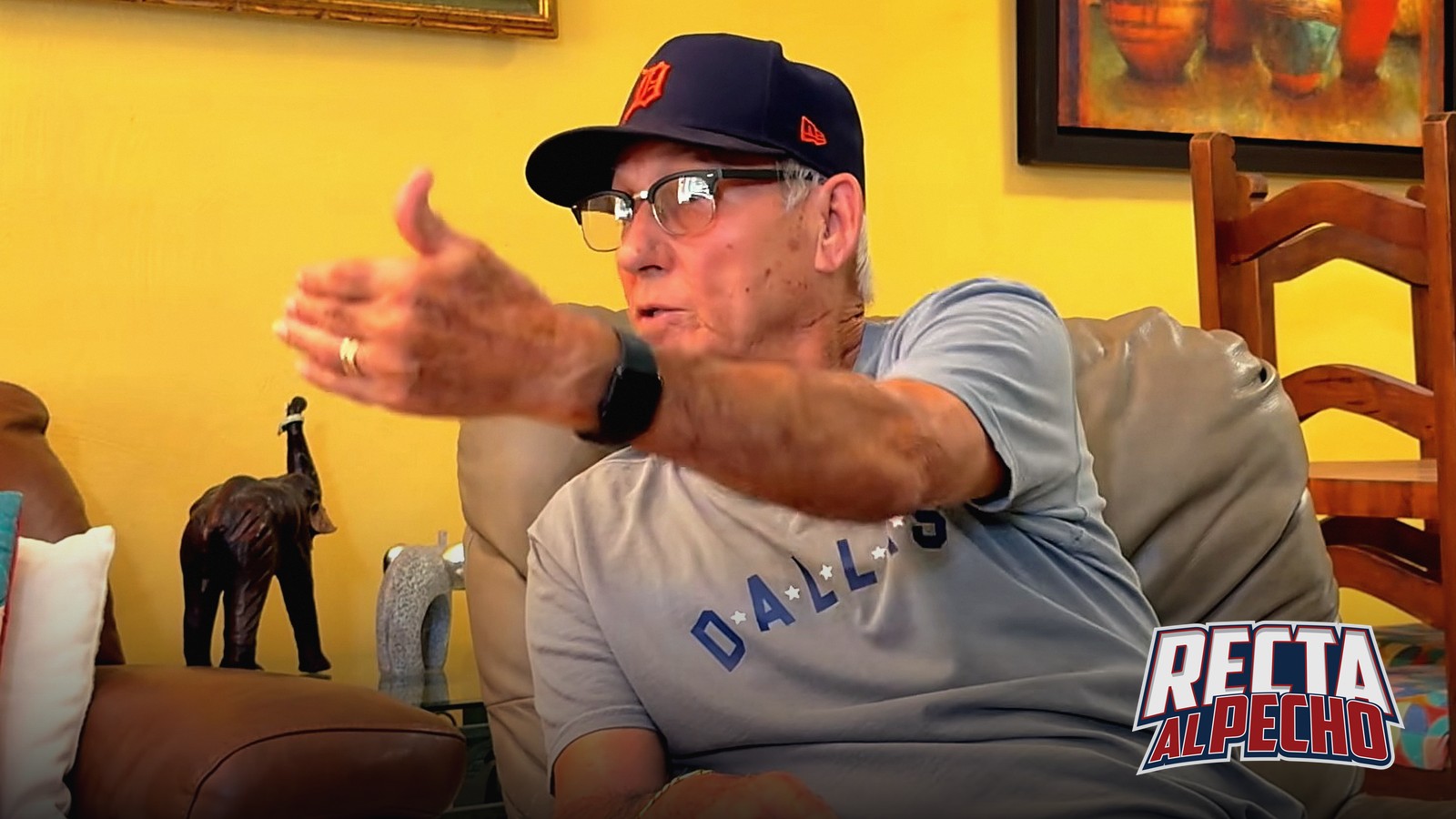
The first Cuban to pass 400 home runs died June 1 at 67. Months earlier he told us he nearly signed at 23, that his whole family cried, and that he regrets not staying.
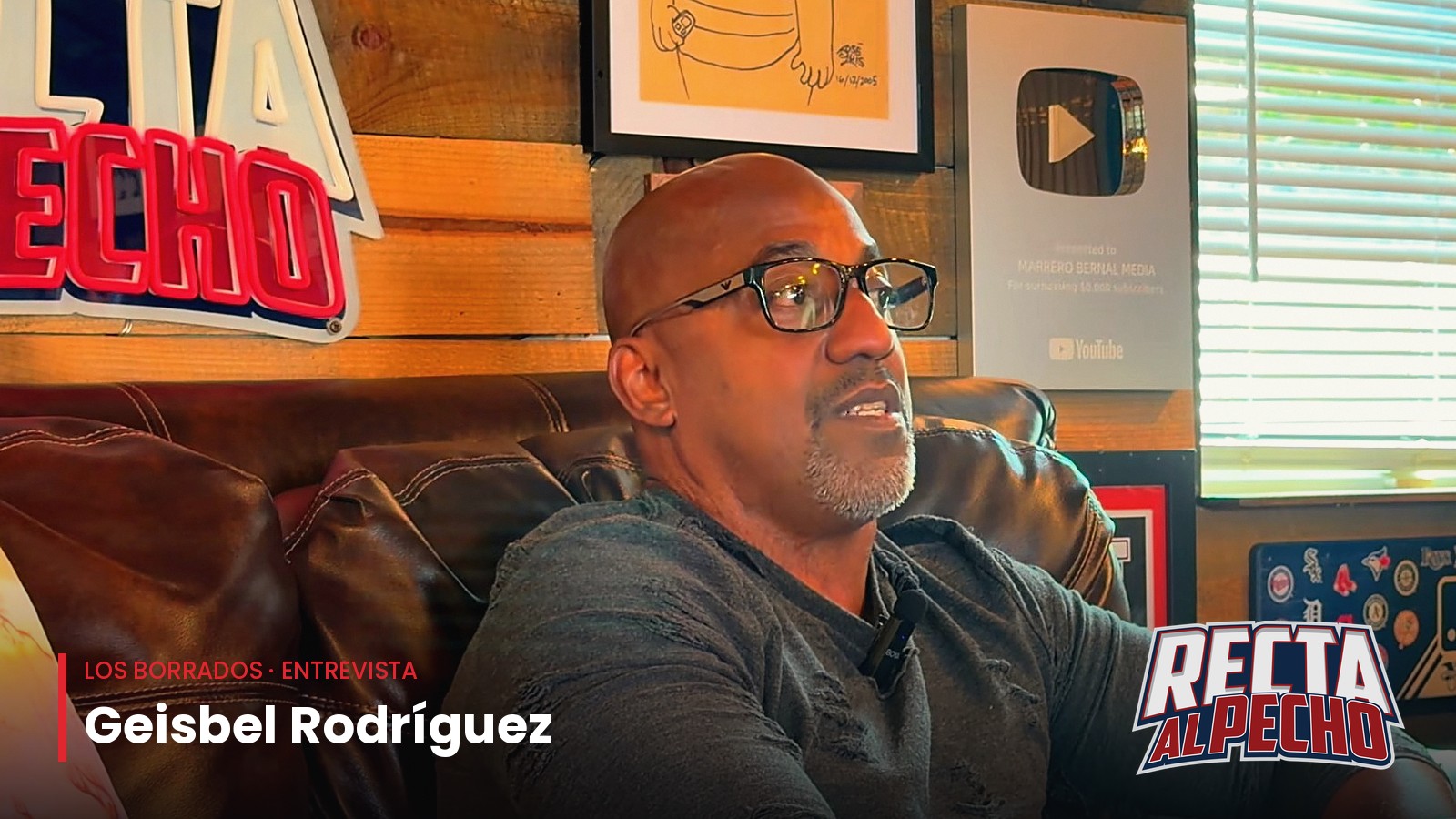
The first Cuban to surpass 400 home runs died on June 1, at 67. Months earlier he opened the doors of his home in Matanzas to our microphone and told what he had never told in full: that at 23 he was going to defect, that his whole family cried, and that the only one who told him “stay” was his brother, the crazy one. He didn’t stay. And he regretted it.
There are interviews you do thinking about next week, and there are interviews you do — without fully knowing it — for history.
This was one of the latter.
Lázaro Marino Junco Nenínger, the man from Limonar who taught Cuba to look up, died on June 1 in Matanzas, at 67, after fighting cancer with the same stubbornness he brought against pitchers for 18 seasons.
He left as what he had always been: the first Cuban ballplayer to break the 400-homer barrier. He finished with 405. He was the home run champion 11 times.
And he also left as the other thing he had always been: a man his country never fully gave the place he had earned.
What follows is what he wanted on the record.
The day everyone cried but one
Let’s start with the confession, because he put it on the table himself without my having to pull it out of him:
“I’m not going to lie to you. Back when I was 23 I was going to stay, to sign.”
It was a tour: Panama, Mexico, Venezuela. Junco had made up his mind. And before leaving, he announced it at home.
“The old lady started crying, the old man started crying, my sister started crying, my daughter. Only one didn’t cry: my brother, the one I call the crazy one. He was the only one who told me: stay.”
Stay. Meaning: go. Sign with them. Don’t look back.
He didn’t stay. The tears at home outweighed the crazy brother’s advice.
And then comes the twist that only Cuban life knows how to deliver, and which Junco told with a bitter smile:
“The ones who didn’t want me to stay are the ones who later asked me: so why didn’t you stay?”
We asked him directly whether he regretted not signing.
“Yes.”
No embellishment. At 67, with his whole life already played out, the greatest home run hitter of his time said yes.
Six chances, a check inside a magazine
It wasn’t one offer, or two. Junco counted more than six attempts to sign him over 20 years.
The most cinematic happened in the stands in Venezuela, while he was playing for Cuba’s B team. A man sat down behind him reciting his own numbers — 31 home runs, 125 RBIs — and handed him a Philadelphia Phillies magazine.
“He told me: open the magazine. Sign there if you want to stay. There was a check inside.”
A blank check inside a magazine, in the stands. He said no. Just as he said no in Panama, where he still kept the scouts’ business cards.
“The B people”
And why was Cuba’s best home run hitter on the B team?
That is exactly the question. Junco was home run champion eleven times and the top national team almost never called him. He and his group — Fuentes, Romero, Wagner — even gave themselves a name:
“We called ourselves ‘the B people.’ Go here, go there, go wherever they send you.”
A Puerto Rican who saw him every year on tour told him bluntly: if you were home run champion that many times in Puerto Rico, you’d be playing in the big leagues; in your country you can’t even make Team Cuba.
And there was a day, while a roster was being put together for the Central American Games, when Rodolfo Puente asked out loud why the home run leader wasn’t on it. The official’s answer was, word for word:
“I forgot.”
Sitting next to Junco was Braudilio Vinent, who let loose the line that sums up half a century:
“The only country in the world where they forget the home run champion is here in Cuba.”
The same Vinent whose story we told in this archive: the one who also gave everything and also ended up waiting for someone to remember him.
Watch Lázaro Junco’s last interview.
Watch the extended three-hour version →
How the slugger was built
Because Junco wasn’t born a home run hitter. He made himself one, with an engineer’s coldness that he explained to me step by step.
He was a contact hitter, a batting-average guy. Until the Matanzas baseball commissioner, Abelardo Castellanos, sat him down in his office and told him the truth nobody said out loud:
“With a build like yours, home runs get paid. The Americans pay for home runs. Look how many hit over .300 in the Serie Nacional: a ton. Now tell me how many hit more than 20 home runs: two or three. There you go. Change.”
And he changed everything. He redesigned his training muscle by muscle — shoulders, forearms, hips, abs, the planes that speed up the swing — and set himself a secret rule he told no one:
“If I hit 20 this year, next year I have to hit 21. And if I hit 24, next year more than 24. When I didn’t reach the goal, I’d say: something went wrong, I have to take a look at myself.”
From 9 home runs in his third season he went to 17 in his fourth. And from there began the run of twenty-something per season that carried him to 405.
The beanball that invented the gesture
All of Cuba remembers Junco pointing his finger after his home runs. Almost nobody knows where it came from.
It came from a pitch to the head.
It was in Calimete, Citricultores against Villa Clara. And it’s worth saying what Junco was chasing that afternoon, because it changes the meaning of everything that came after: he already had a home run, a double and a triple off the starter. He was a single short of the cycle, and that was exactly what he was going for. He told the teammate hitting behind him.
“I’m going to hit it up the middle, for my little single, to finish my cycle.”
In the seventh they brought in Isidro Pérez in relief, with the bases loaded. The first pitch was a fastball away. The second came up and in.
It split his helmet — those flimsy little helmets they had back then — and left him standing in the box not knowing where he was.
“When I got up and looked toward first base, I saw first base way out there in right field.”
He took three steps and fell. They took him to the hospital in Colón and from there to the one in Matanzas, admitted overnight for observation.
The person who went to see him that night was a friend of his who played for Villa Clara — that is, someone from the other dugout. And he confirmed what Junco already suspected:
“They ordered him to throw at you. The manager told him to hit you, and that guy went along with it.”
The doctor told him to rest. Junco asked him if he really thought he was going to rest.
The next day he went to the ballpark, stepped into the box against the same pitcher, looked at the catcher and warned him:
“If he hits me, I’ll kill him.”
He threw him the fastball. Junco put it over the roof. And he pointed.
“That’s when I started doing it.”
The most famous gesture of the Cuban home run wasn’t born of arrogance. It was born of the response of a man they had tried to split open.
The fax with 63 names
And now, the retirement. Which wasn’t a retirement: it was a list.
Junco was coming off a season hitting .323, with twenty-some home runs and eighty-some RBIs. He went to play a tournament in Ecuador, and there a pitching coach from the Mets organization came up to him:
—Junco, you’re retired in Cuba.
He laughed. The man took him to his office and showed him a fax: a list of 63 players retired all at once. His name was on it.
“I was stunned. I said: this can’t be true.”
He found out about his own retirement from a fax, in another country, from a foreigner.
He went back to Cuba and fought it. There was a meeting at the provincial office of INDER, Cuba’s sports ministry, with the commissioner and the director, and Pancho Soriano showed up armed with the numbers: more than 20 home runs in each of his last five seasons.
“Give him to me for a big-league team,” Soriano said. “I’ll take him on my team,” Pacheco said.
The official answer was a single sentence, one of those that mean nothing and decide everything:
“The thing is, this isn’t contemplated for the Olympic cycle.”
Junco had done the math: six more seasons, taking care of himself the way he did, and he would reach 500 home runs. A number nobody in Cuba has ever touched.
“It hurt. I had projections, and I’ll say it: ambitious projections. But when the people in charge set their minds to something, it’s hard to get away.”
Years later, already old, he threw batting practice to the Matanzas kids and left them open-mouthed hitting balls over the roof of the Victoria de Girón stadium. The kids asked him why he had retired.
“Why did I retire? No: why did they retire me?”
Four thousand against one hundred fifty
At a veterans’ tournament in Colombia, Junco met that country’s sports legends: neat old men dressed in white who came to greet him at the airport.
He asked them how much Colombia paid them for being sports legends. They told him the figure in Colombian pesos, which in the conversation came to thousands.
They asked him how much Cuba paid him.
“150 pesos. And they told me: but that’s not even enough for groceries.”
It is the same math, exactly, that came up at Vinent’s house in La Maya. Two giants of the same generation, the same insulting pension, the same institutional silence.
The hardest part to write
And now I have to tell the part that some readers of this site will struggle with, and I am going to tell it in full, because you respect the dead with the truth, not with an edited version.
Lázaro Junco died a Fidelista. He said so in front of our camera, with that distinction of his:
“I’m not a revolutionary. I’m a Fidelista. It’s not spelled the same.”
And in the same conversation, with no contradiction as far as he was concerned, he said he regretted not signing. And he explained why both things fit in the same chest:
“Back then they had drilled into us that sports were politics. And I think that’s one of the things that has kept us tied to a yoke. Sports have nothing to do with politics. If I had signed, I would still be as Cuban as anyone. You carry your homeland inside, in your heart.”
And about the kids leaving today by the dozens, the Fidelista from Limonar said this, which is worth more than a hundred analyses:
“None of them are leaving over politics. None of them are leaving because they despise their homeland. That’s a lie. They’re leaving because they want to test themselves against the best in the world, and because of the economic situation. And nobody is going to stop them.”
That man doesn’t fit any slogan, from either side. That’s why he had to be heard.
How he asked to be remembered
Near the end we asked him how he wanted to be remembered. I am keeping his full answer, because now it is a last testament:
“As the person I was. Humble, modest. The friend, the teammate, the brother, the one who gives you a hand when you really need it. A person passionate about baseball, who gave everything for his province.”
And he told us the most beautiful thing that had happened to him since retiring. He didn’t mention a single trophy:
“When I see those kids who greet me on the street. The one who never saw me play and still recognizes me. That’s beautiful. In the end that’s what you take with you: the gratitude of the people, who in the end are the ones you played for.”
Lázaro Junco died without his 500 home runs, without recognition from the institutions that retired him by fax, and with 150 pesos’ worth of sporting glory.
But he died recognized by the kids of Limonar who never saw him hit.
He himself, in this interview, said the line that serves as his epitaph:
“No matter how much they want to, they can’t kill history. History is written. Nobody can erase that.”
Rest in peace, the man who pointed to the sky. His name stays on this side of the fence, written into history — the history that, as he said himself, nobody can kill.
Interview conducted in Cuba by the Recta Al Pecho team, with questions and direction by Eliam Marrero Bernal, months before Lázaro Junco’s death on June 1, 2026. His statements are taken verbatim from the recorded conversation, available on our YouTube channel in two versions: the original interview and the extended three-hour version with all the previously unreleased material.
Originally published in Spanish on Recta Al Pecho.