
Aug 16, 2026 · By Eliam Marrero Bernal
Cuba promised him a car in 1992 and never delivered. In the United States he has owned seven
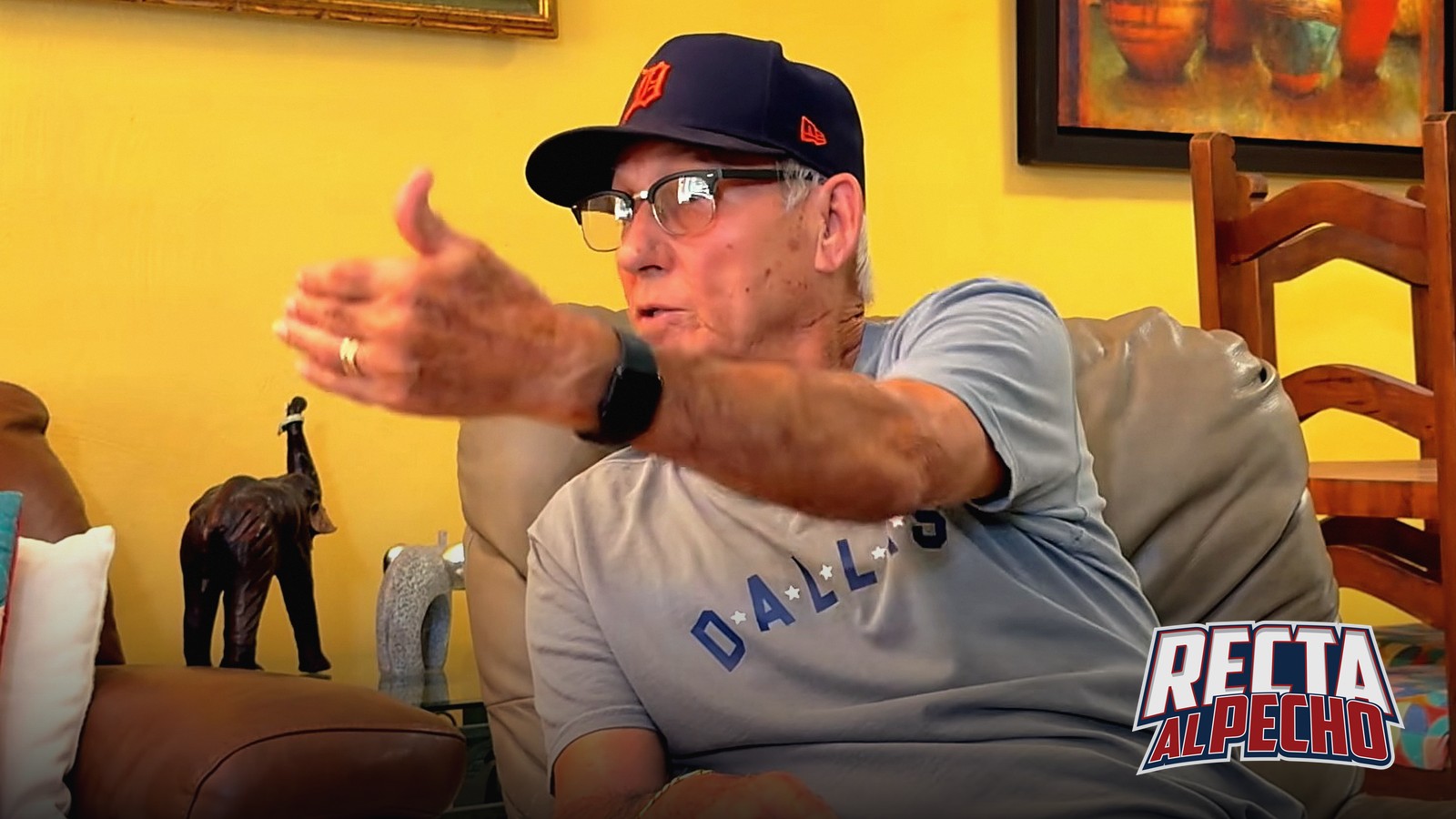
Juan Carlos Millán reached 100 home runs faster than almost anyone and was Cuba’s best first baseman for five years, yet never made the top national team. His explanation: “I wasn’t in the Party.”
Juan Carlos Millán reached 100 home runs faster than almost anyone in Serie Nacional history, hit .667 at a Central American Games and was Cuba’s best first baseman for five years. They never took him to the top national team, and nobody ever explained why. He has the explanation: “I wasn’t in the Party. My thing was baseball.”
Sometimes the whole story of a system fits inside a car.
In 1992, after years of medals and home runs, Juan Carlos Millán was promised the right to a used car. It was the top prize in Cuban baseball: not a salary, not a contract — the right to buy an old car.
They promised it and never gave it to him. They had eleven years to make good, until Millán left the country in 2003.
So I asked him the closing question of that story:
—And from 2003 to now, how many cars have you had in the United States?
“Seven.”
Eleven years waiting for a used car that never came. Twenty-two years in this country: seven cars.
You don’t need an economics treatise. You need an honest ballplayer and one question.
The kid who didn’t raise his hand
Millán didn’t even want to play baseball.
When a coach came to his school looking for athletes for a league for 9- and 10-year-olds, he was the only one who didn’t raise his hand — his cousin gave him away: the one who plays the most baseball around here is him.
His father had another condition for him, a farmer’s condition and a sacred one:
“Until you finish your plot on the farm, you can’t play baseball.”
Out of that farm kid came enormous strength: at 12 he was already hitting 300-foot home runs.
And out of that came one of the fastest offensive careers Cuba ever saw:
“I reached 100 home runs in four years. If I wasn’t the first, I’m second.”
With the glove, another elite mark: 117 chances without an error at first base, a two-year streak that only a grounder from Gabilán could break.
And at the 1990 Central American Games — his only appearance with the top national team — he did what players with talent to spare do: homered in his first at-bat and finished hitting .667.
That is the man they never called again.
Five years as the best, zero call-ups
Here is the record of the injustice, told without a gram of exaggeration:
“Every year, in the tryouts for the top team, I was the one hitting the most. And they always left me off. One year I hit 16 home runs in the tryouts — I was six or seven ahead of the guy in second — and they didn’t take me that year either.”
Who did they take that year? Kindelán, Linares, Pedro Luis, Gurriel.
All of them monsters, and Millán is the first to acknowledge their class — he says Kindelán was the best home run hitter Cuba ever saw.
But he was the starting first baseman in the tryouts and the leader in the numbers, and he was left behind without anyone giving him a reason.
I asked him which, of all of them, was the worst injustice he lived through:
“The five years I was the best first baseman in Cuba and they never took me to Team Cuba. And without any explanation. They never gave me an explanation.”
And why didn’t he ask for one?
Because in that Cuba, asking came with a price:
“If you spoke up, it was worse. They punished you more.”
“My thing was baseball”
So what was Millán’s sin? He states it with four negatives that amount to a biography:
“I wasn’t in the Party, I wasn’t in the Youth, I wasn’t in State Security. My thing was baseball.”
There is the criterion that never showed up in any box score: revolutionary integration.
Millán confirms what this series has been putting together piece by piece — that there were players on Team Cuba who were State Security, even if nobody in the dugout knew for certain who; that the Party card weighed as much as the batting average; and that the list of players punished without explanation was long:
“Romelio Martínez, Junco, Fausto Álvarez… a lot of athletes. And the reason wasn’t just performance: it was revolutionary integration, as they called it.”
The same Lázaro Junco from this archive. The same machinery Gabriel Pierre confronted with his fists.
The man who dismantled Cuba and then stayed
And when I asked him for a name — the person mainly responsible for that factory of injustice — Millán didn’t think twice, and added the most venomous twist of the whole interview:
“The main one was him, Miguel Valdés. He was the one who fooled people. He dismantled Cuba… and then he stayed.”
Read it slowly.
The man who for years decided who was revolutionary enough to wear the four letters, who left out the ones who weren’t in the Party, who — according to Pierre — blocked players over personal grudges… ended up living in the United States, where today he runs a baseball academy.
The ones he measured with the yardstick of loyalty stayed in Cuba waiting for a car. The man with the yardstick is in Hialeah.
“He had his favorites, 10 or 12 athletes, and the others didn’t exist for him. There was too much favoritism. And that’s what led to a lot of athletes leaving.”
Watch the full interview with Juan Carlos Millán.
Retired at 30, exported to Colombia
In 1997, at 30 and coming off a strong showing at the bat in the Super Selective series, Millán got the same treatment as Junco: mandatory retirement.
And the consolation prize turned out to be another broken promise:
“They told me they were going to send me to Japan or Italy, and in the end they sent me to Colombia. That was a deception too. The contract was supposedly for four years, and I only got one.”
But the deeper damage had come earlier.
Millán admits the exact moment the system killed his love for the game:
“By ’96 I didn’t have the desire anymore, even though I still had the quality. I fell out of love with baseball. The last two years I was just going through the motions. So much injustice wore me down, until I let my training slip.”
Arocha’s roommate
A fact for the history books: on the 1991 tour of the United States, Millán shared a room with René Arocha.
They got off the plane together in Miami — and Arocha walked toward his family, who were waiting for him at the airport, and never came back.
The next morning the team woke up to the news that changed Cuban baseball forever.
Resentment? None:
“Everyone knows what they want to do. He wanted to stay, he did it for some reason. It never bothered me.”
Millán took twelve more years.
In 2003 his wife won the visa lottery, and the reason for his move had nothing to do with politics:
“I decided to come here to give my kids a better life. Nothing more.”
And he gave it to them: his son — who from age 5 never had any coach but his father — made it to Triple-A in the Marlins organization.
“I felt good, because the only coach he had ever had was me.”
He confessed his unfulfilled dream with a smile: he would have liked to play even one game on the same team as his son.
The man they robbed of even the desire to watch
And here is the wound that makes this interview different from all the others in the series.
From Vinent they took away care and attention. From Valle, his albuterol. From Junco, his career, through forced retirement.
From Millán they took something deeper: his love of the game.
“I cut myself off from baseball completely. I don’t like watching it — I watch it when the World Series is on, that’s all. I don’t feel good playing baseball anymore.”
—Did Cuba’s decisions affect you that much? — I asked him.
“Quite a bit. That’s why I don’t focus on it, and I don’t want to know anything about baseball.”
One of the great sluggers who can no longer stand to watch a game.
That is the toll that doesn’t show up in any statistic.
The only thing that survived is the seed: at his home in Miami he has a batting cage, and three or four kids a week. And two grandsons who — he says — they are working on.
At the end I asked him if he regretted anything.
His answer was that of a man at peace:
“In life I never regret anything.”
Not the plot on the farm, not the five stolen years, not Colombia, not arriving late.
And the car Cuba has owed him since 1992 — whoever has it can keep it.
Millán is already on his seventh.
Interview conducted by Eliam Marrero Bernal for Recta Al Pecho, in Miami. Juan Carlos Millán’s statements are taken verbatim from the recorded conversation, available in full on our YouTube channel.
Originally published in Spanish on Recta Al Pecho.