
Aug 21, 2026 · By Eliam Marrero Bernal
Jorge Soler was thrown off the ballfield one block from his house
He became a World Series MVP. Before that, Cuba suspended him indefinitely, kicked him off his hometown field and kept him from burying his grandparents. That’s why he says no to the Classic.
He was the Most Valuable Player of a World Series. Before that, the Cuban government suspended him with no end date and threw him off the only ballfield in his town, where he went alone to stay in shape. When his grandparents died, he couldn’t go bury them. That is why he says no to the World Baseball Classic.
I asked him where “El Crudo” — “the Raw One,” as half of Cuba knows him — came from.
“It comes from when I was about fifteen, sixteen. I was playing for the Melena del Sur first-division team and a first baseman named Rají started calling me negro crudo. And it stuck.”
I asked him what it meant.
“I was a kid with a lot of talent but kind of raw. Like a diamond in the rough, to sum it up.”
A diamond in the rough. Hold on to that image, because what follows is the story of what Cuba did with that diamond.
Twenty at-bats
Here’s a fact that surprises a lot of people: Jorge Soler barely played in Cuba.
“I don’t think I even played twenty games. I had like twelve at-bats, something like that, and that’s when I made the decision.”
He played for the La Habana team — not Industriales, as Wikipedia still says to this day — around 2011. And he left not for money, but for something much simpler:
“My decision to come here was because I wasn’t playing on the La Habana team. And that stressed me out. I said: hey, I think I can play here. If I have the talent, how is it possible that I can’t play here?”
At fifteen, at a tournament in Mexico with Team Cuba, he had already been told he was worth about five million dollars on the market.
That wasn’t what moved him. What moved him was not being in his own province’s lineup.
Caught by the Coast Guard
The first attempt was by sea and it ended badly: the U.S. Coast Guard stopped him on the water and sent him back to Cuba.
“That’s where all the problems started.”
They suspended him. And here again is the word that repeats in every one of these interviews:
“They didn’t tell me, for example, hey, we’re going to suspend you for one or two years. They suspended me and I didn’t know when I was going to play again.”
No end date. Like Eduardo Paret, who got four indefinite years over a phone call. Like Rey Vicente Anglada, who got nearly three years in prison without a single piece of evidence.
Cuban punishment doesn’t run on a calendar: it runs on a mood.
The field on the corner
And now the scene that strikes me as the cruelest of the whole interview, precisely because there is nothing dramatic about it.
Back in Melena del Sur, regretful and without a team, Soler started going to the town ballfield. He lived a block away. He wasn’t going to play with anybody: he went to move around so he wouldn’t lose his shape.
“They threw me off the field. They told me I couldn’t train there. A humiliation. I wasn’t tied to any team, nothing. I was just watching practice so I wouldn’t get out of shape.”
A twenty-year-old kid, a block from his home, kicked off a patch of dirt because he had tried to leave.
And on top of that, the trap: he had gone through the pre-screening for military service and they never gave him his discharge. When they caught him defecting, they started summoning him.
“That made me really desperate, because if they took me for military service I couldn’t try to leave anymore.”
He had to get out before they drafted him. Against the clock.
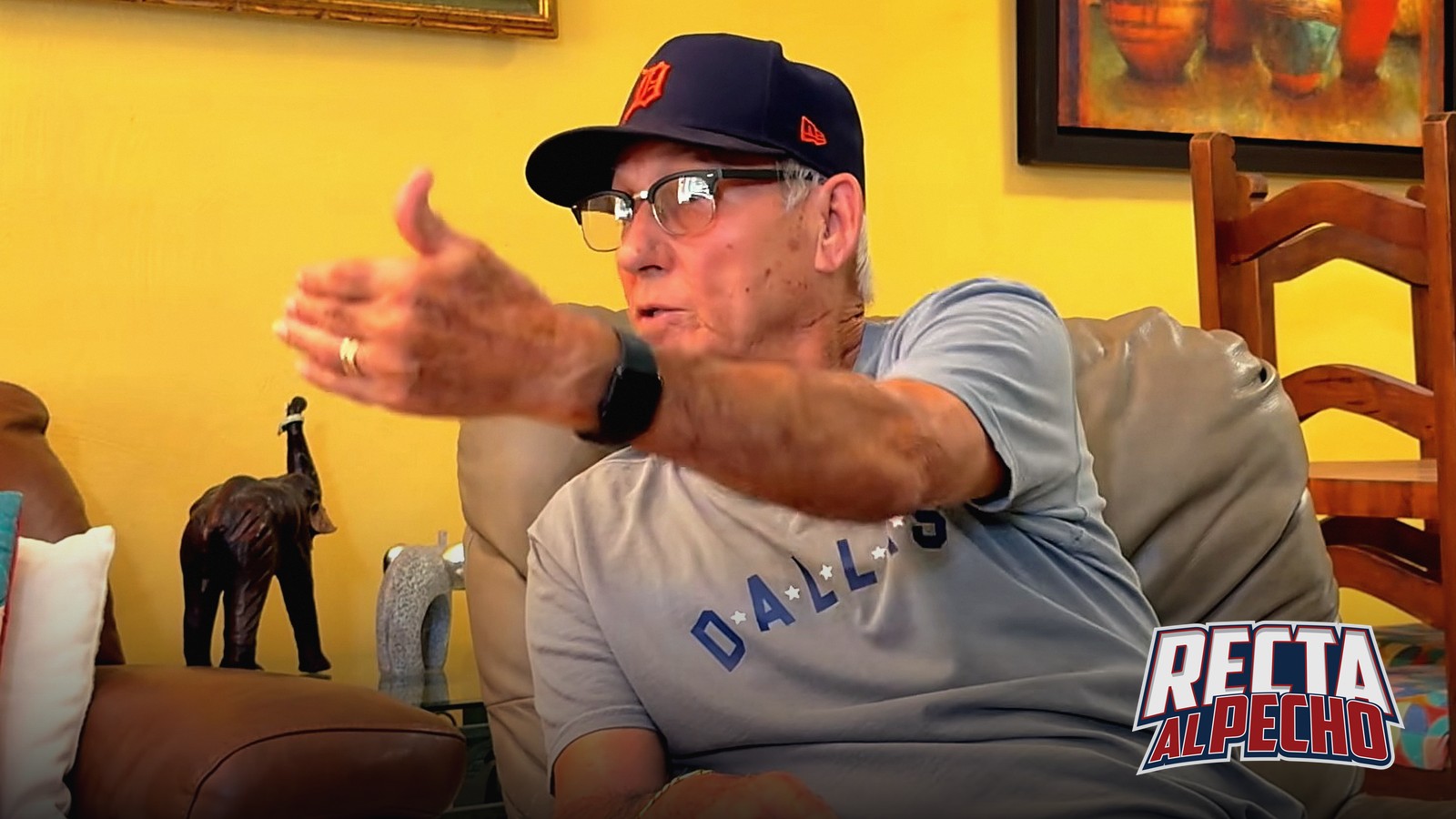
Watch the full interview with Jorge Soler.
Six months in the brush
What came next he describes with a frightening matter-of-factness, because for him — and for hundreds like him — it was routine.
“There were a thousand attempts in the brush. You go out to the brush, the boat doesn’t come in, you look behind you. They’re almost always places you don’t know. And that’s how it was all the time.”
Six months like that. Until the boat came in, leaving from Holguín or Las Tunas, and crossed to the Dominican Republic.
There’s a detail from that arrival that says everything about how little you know when you get on a boat:
“When I got to the Dominican Republic I thought I had arrived in the United States, because they really never tell you what’s going to happen. I called my mom and told her: Mami, I’m in the United States. And no.”
From the Dominican Republic he went to Haiti to establish residency. And from there, finally, to the tryout.
From raw to the World Series
He signed with the Chicago Cubs and the climb was dizzying: rookie ball, Class A, two or three real weeks in Double-A, a month and change in Triple-A, and on to the big leagues.
Then came Kansas City, Atlanta, San Francisco, Miami. And in 2021, the World Series MVP award.
“I never really imagined that in my life. But as they say, God’s plan is perfect.”
I asked him which team he enjoyed most and he said the Cubs, with an honesty about the business you don’t hear much:
“You always see yourself there, but reality isn’t like that. This is a business. After they trade you the first time, you kind of lose the love for a single team. You’re just left with the love of baseball.”
And I asked him about something close to home on this channel: Barry Bonds, who was around the batting cage when Soler was in San Francisco.
“A classy guy. If he had something to tell me, he told me the right way.”
And did the advice help?
“He was born to hit. He can tell you what he thought, but hitting doesn’t work like that. He was born with that talent.”
Why he says no
We got to the World Baseball Classic question. They contacted him for the first one he was eligible for. He said no. And his answer is still no.
But what matters isn’t the answer: it’s the reason.
Jorge Soler was raised by his grandparents. He was the old man’s favorite grandson, the one who went with him to the ballgames.
Both died while he was here. First his grandfather. Then his grandmother.
Soler had been in the United States about four years, and back then the eight-year rule was in force: anyone who had left had to wait eight years before being allowed back.
“I couldn’t go to Cuba to see my grandparents because of that situation.”
There’s the bill. It isn’t ideology, it isn’t a calculation, it isn’t a social-media pose. It’s a man whose country made him pay for leaving with the funerals of the two people who raised him.
“I can’t allow myself to play for Team Cuba, for that team of theirs.”
About Moncada, not a word against him
I asked him about Yoan Moncada, who said publicly that he did want to go and got piled on by half the internet.
Soler didn’t go there.
“I respect every player who wants to go. Everyone makes their own decision. I’m good friends with him and I respect his decision.”
And then he drew the distinction with surgical precision:
“His case was different. He came on a plane. It’s a different situation.”
I pointed out that Moncada hadn’t been trampled on. His answer was a single line:
“They did trample on me.”
That’s it. No insults, no campaign, no demand that anyone think like him.
The difference between those who left on a plane and those who left on a boat isn’t an opinion: it’s a biography.
What he would tell the kid from Melena del Sur
We closed by asking what he would tell the people back there.
“Never ease up. There will always be people who tell you that won’t amount to anything, that it can’t be done. Stay focused, because you can. That’s how I was. I was always underestimated back in my town. And look at the career I’ve had.”
The kid they called raw ended up as a World Series MVP and one of the Cubans with the most home runs in big-league history.
The country that threw him off a dirt field a block from his house has never apologized to him. Nor does he need it anymore.
The only thing Cuba owes him, and can never repay, is the goodbye to his grandparents.
Interview conducted by Eliam Marrero Bernal for Recta Al Pecho. Jorge Soler’s statements are taken verbatim from the recorded conversation, available in full on our YouTube channel.
Originally published in Spanish on Recta Al Pecho.