Aug 12, 2026 · By Eliam Marrero Bernal
The myth of the invincibles: that Cuba didn’t dominate the big leagues — it dominated college kids
Cuba’s 1980s generation was extraordinary, but the legend that it was the best baseball in the world rests on a trap: full-time professionals dressed as amateurs, playing against college students.

Cuba’s generation of the 1980s was extraordinary.
But the legend built around it — that it was the best baseball in the world, invincible, superior to the majors — rests on a trap nobody wants to look at head-on.
We are going to look at it here, with a weapon no other outlet has: the voices of the protagonists themselves, sitting in front of our microphone.
By Eliam Marrero Bernal
Every Cuban fan of a certain age carries the same article of faith: the baseball of the ’80s was the best in the world.
Invincible. Superior.
Those teams — so it is said on every street corner, at every fan gathering, in every barbershop argument — would have beaten anyone, big leagues included.
That myth answers a psychological need for superiority — the only victory an increasingly poor country could show the world — and it rests on a rigged asymmetry that almost never gets named:
Cuba sent athletes with the preparation, dedication and craft of full-fledged professionals, disguised as “amateurs,” to compete against college kids.
And then it bragged about beating “future big leaguers,” ignoring the detail that changes everything: those kids were years of maturity away from becoming what they later became.
Full-time professionals against students
I don’t need to be the one to say it.
The protagonists said it, on this channel, with their names and their faces.
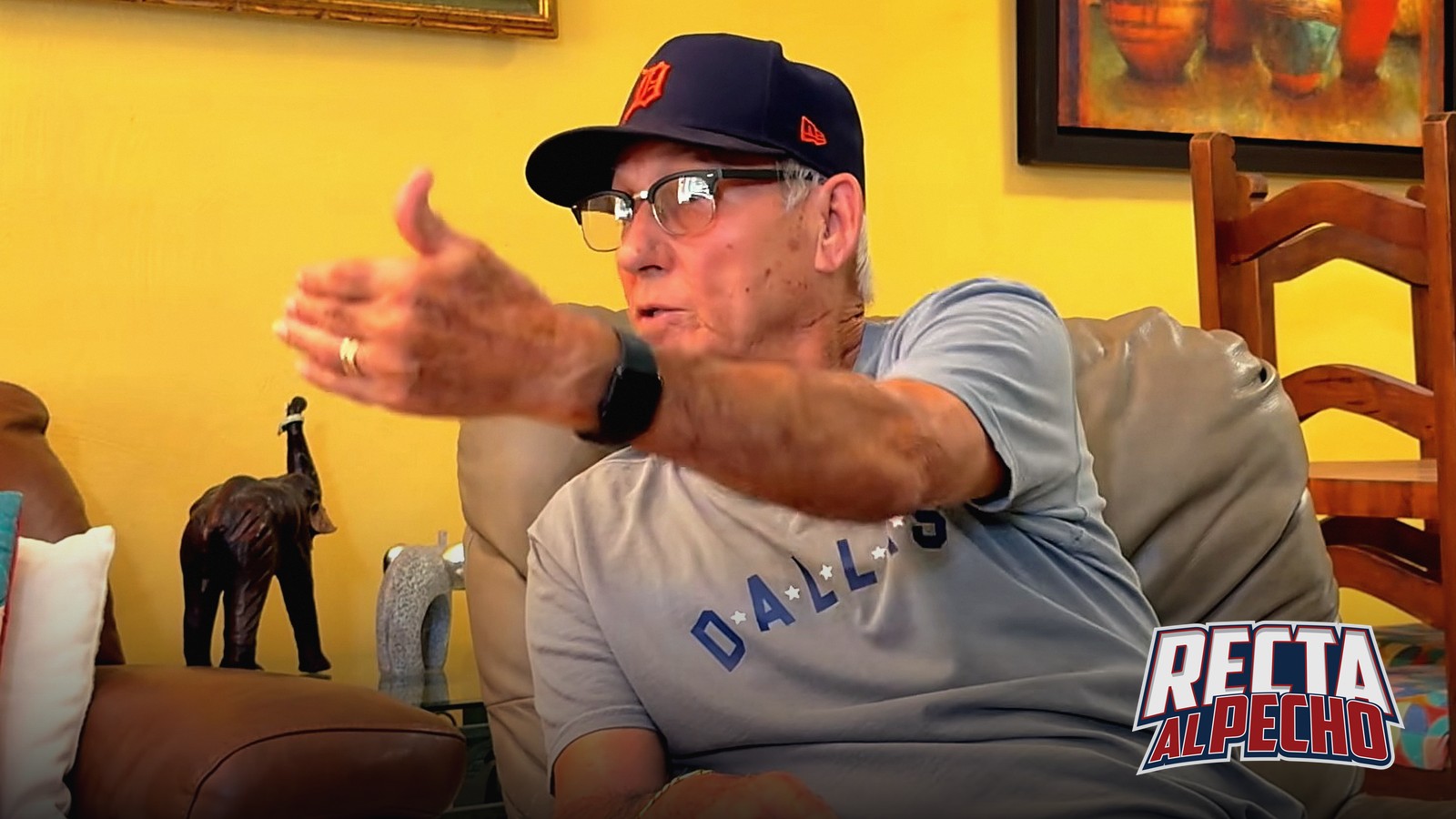
Juan Carlos Millán, the La Habana slugger, describing those teams’ routine:
“We trained in the morning, at midday, and sometimes we played at night too. We lived off baseball and nothing else.”
That is the dictionary definition of a professional: a man who lives off his sport and devotes his entire day to it.
When I put the label in front of him in the interview — you guys were professionals — his answer was a historic shrug:
“We were supposedly amateurs. Amateur was the title.”
Antonio Scull went even further, and gave the system the name it deserves:
“The training was super good. We lived off baseball and nothing else… we were supposedly amateurs. That was an international hoax.”
And who did that professional machine measure itself against at official tournaments?
Against the weakest link in organized baseball: genuinely amateur national teams — men with jobs and studies — and, in the case of the United States, teams of college players.
Kids of 19, 20, 21, still developing, facing grown men of 28 and 30 with a decade of Serie Nacional seasons under their belts.
Lázaro Valle described for us, without meaning to, the other side of the asymmetry — Team Cuba’s preparation circuit, which was that of a world power:
“We’d go to Japan and play against top-tier teams from the Japanese professional league. Then we’d go down to altitude training, iron out all the mistakes, and on weekends we’d go out and play against teams that had high-level players. By the time you got to the official tournament, you were in peak form.”
Read it all the way through:
Preparation against Japanese professionals, altitude camp, scientific fine-tuning — and then showing up at an “amateur” tournament against students.
That isn’t dominating world baseball.
That’s fighting in another weight class with a forged ID.
Havana, 1984: the college kid named Barry Bonds
And what happened when a genuine talent came along among the students, even a raw one?
The 1984 Amateur World Series in Havana.
The American team showed up with a skinny outfielder from Arizona State, a 20-year-old college player without a single day of professional seasoning.
His name was Barry Bonds.
That kid, against the Cuban machine in its own house and at its peak, led his team’s offense and finished the tournament tied for second in RBIs in the entire championship — with none other than Lourdes Gourriel in the prime of his career.
A 20-year-old student, going toe to toe in run production with one of the best hitters of Cuba’s best generation.
That is the real size of the gap the myth hides: what Cuba called “beating the Americans” was beating the unfinished version of players who, years later and with professional development, became monsters.
Bonds himself is the extreme example: the college kid that Cuba saw up close ended up, with 762 home runs and seven MVP awards, as one of the two or three best players in history.
In 1984 he was just a kid — and even then he was driving in runs like Gourriel.
Ty Griffin, or the proof in reverse
The myth also has its proof in reverse, and its name is Ty Griffin.
Griffin was another college player — a second baseman — and he made Cuban baseball truly suffer: his hits off the island’s pitching at the late-’80s tournaments still sting in the memory of those who saw them.
If the Cuban level had been big-league level, a man capable of torturing that pitching staff like that should have been a star in the majors.
Do you know what Ty Griffin’s big-league career was?
Nonexistent.
He never debuted.
Millán, who played against him, said it in our interview without realizing he was taking the myth apart:
“I played against Ty Griffin. But Ty Griffin didn’t make the big leagues. He stayed in the minors.”
There is the full syllogism, and it is lethal:
The man who dominated Cuban pitching wasn’t good enough for the majors. Where does that leave Cuban pitching?
And the ones who did make it — Tino Martínez, Robin Ventura — confirm the other half of the argument: when they faced Cuba they were college players still developing, and they became big leaguers later, after years of development in pro ball.
Cuba never beat the big-league Tino Martínez and Robin Ventura.
It beat the college versions.
The interviews cited in this article — Millán, Scull, Valle, Anglada and other protagonists — are available in full on our YouTube channel.
1999: the day real professionalism showed up
The real distance became clear the day authentic professionalism finally stood on the other side.
March 1999.
The Baltimore Orioles — a cellar-dwelling MLB team that would finish that year with a losing record — traveled to Havana with their stars and their front-line pitching.
The result: the national team’s offense, in its own Latinoamericano, with its own crowd and its mystique, was tied up in knots:
Two runs in eleven innings.
It lost 3–2, to the bottom-feeder of the league the myth claimed it could dominate.
And Baltimore’s rematch, the one the propaganda celebrated as proof of parity?
It had context nobody in Cuba mentioned: it was played in May, in the middle of the regular season, and the Orioles weren’t going to risk the health of their star starters or their top relievers in a midweek exhibition game.
Cuba beat the worst of a bad team’s pitching 12–6, while that team was saving itself for the games that counted.
That is the fine print of the feat.
A single weekend of real professionalism was enough to put the thermometer where it belonged: competitive, yes. Invincible, never.
The painkiller: “he would have been a star, but he chose to stay”
When the door opened in the ’90s and Cuban players began to truly test themselves, reality did its work.
Some — the absolute elite of the elite — triumphed in a big way: Liván Hernández, El Duque, José Ariel Contreras proved it with rings and millions, and this channel has told their stories with the respect they deserve.
But the vast majority of those who made the leap found a brutally hard road, or flat-out failed.
Rey Vicente Anglada gave us, on this channel, the figure that defines the funnel:
Of those who sign, barely 3% manage to establish themselves in the majors.
That number doesn’t distinguish between passports.
That number is the level of the big leagues.
And because that reality hurt, local pride manufactured its painkiller: the myth of “he would have been a star, but he chose to stay.”
Here we have to be fair, because our own archive demands precision.
The real offers existed — for the elite.
This site has documented the briefcase with 50 thousand dollars that was opened for Scull in a hotel, the check slipped to Lázaro Junco inside a magazine, the Orioles scout who came looking for Gabriel Pierre by name.
That happened, and it is on tape.
What didn’t exist was the inflated version handed out afterward for everyone else: those “evaluations by American scouts” that turned every decent Serie Nacional player into a sure-fire big-league star who gave up millions out of love.
Evaluations nobody ever saw, that appear on no piece of paper, and that lived in only one place: the narrative of the island’s coaches, who needed their kids — and their losers — all to be potential giants.
The 3% funnel says something else.
It says that for every Liván there were dozens who would have topped out in Double-A.
And there’s no dishonor at all in that — the dishonor is needing the lie.
The oasis
The generation of the ’80s was the best thing Cuban baseball ever produced, and no myth-busting takes that away.
Linares was world-class by any measure. Those teams played beautiful baseball, with hunger and with class.
But the legend of invincibility wasn’t a sporting judgment: it was a political construction that needed the isolated country to be the best in the world at something, at least.
And to sustain it, the perfect trap was set: full-time professionals, prepared against Japanese pro teams and polished at altitude camps, presented as humble amateurs facing students with final exams.
In the end, that supposed golden age of superiority was just that: an oasis for an isolated fan base, which confused beating students with dominating the true level of the big leagues.
The voices in this article don’t belong to enemies of Cuban baseball.
They belong to its legends — Millán, Scull, Valle, Anglada — telling, finally without a script, how it all worked on the inside.
We didn’t knock down the myth. They did.
This article is based on Recta Al Pecho’s original interviews and on verified statistical records from the amateur world championships and the 1999 Orioles–Cuba series. The full interviews are available on our YouTube channel.
Originally published in Spanish on Recta Al Pecho.