
Aug 23, 2026 · By Eliam Marrero Bernal
“He plays for the crowd”: the myth of Germán Mesa, the best shortstop Cuba never measured
Every Cuban fan says Germán Mesa is the greatest shortstop in Serie Nacional history. A seasoned evaluator, the big leagues and the stats point to Rey Ordóñez and Eduardo Paret instead.
Ask any Cuban fan who the best shortstop in the history of the Serie Nacional — Cuba’s National Series — is, and the answer comes out on its own: Germán Mesa, El Mago, El Imán — the Magician, the Magnet.
But when you put the question to a credentialed evaluator, to the big leagues and to the statistics, two other names come up — Rey Ordóñez and Eduardo Paret — and the Magician finishes third in his own myth.
This is the case file.
By Eliam Marrero Bernal
Let’s start with a scene almost nobody knows about, because it happened far from Cuban cameras.
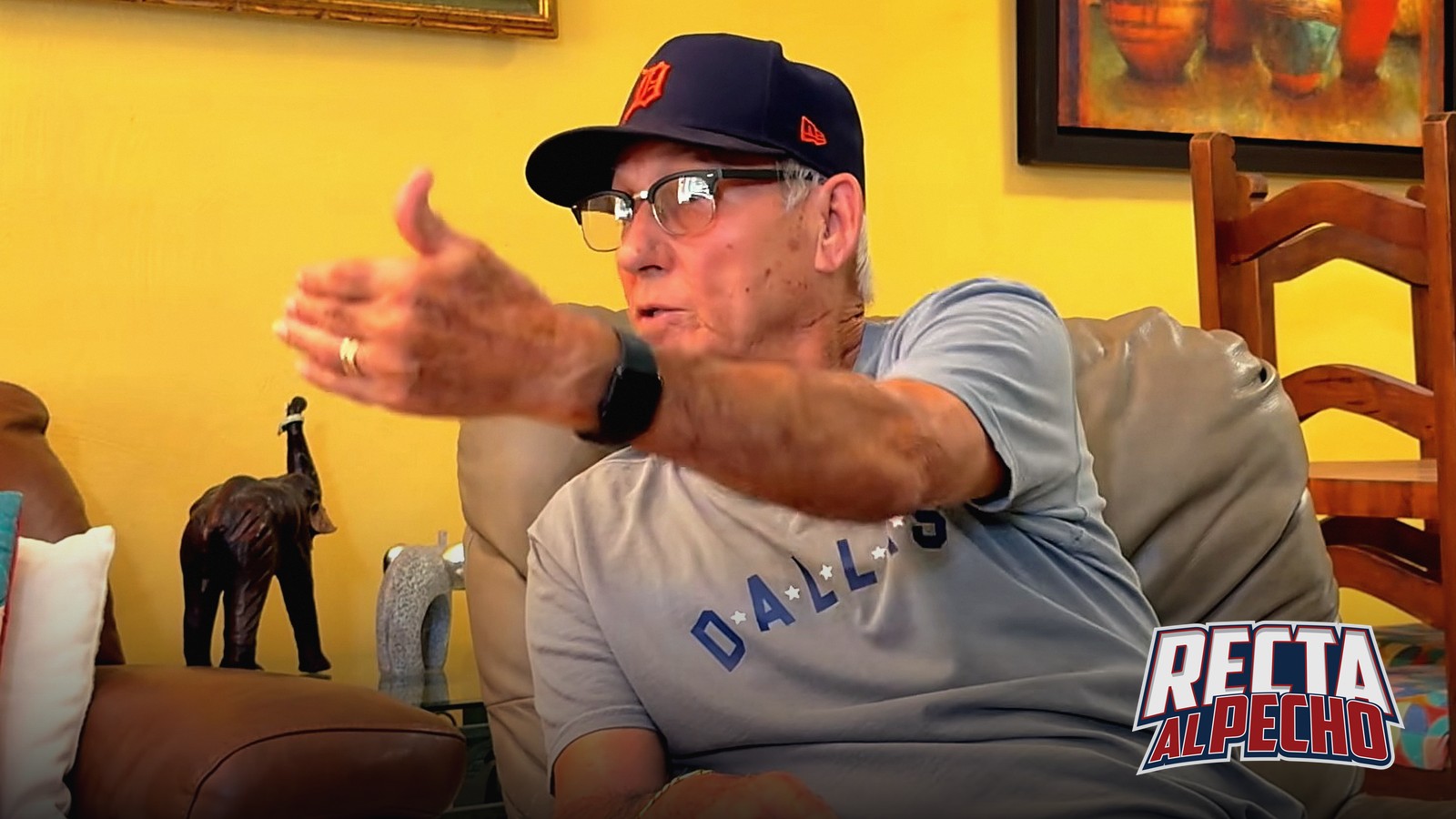
Tito Fuentes — a San Francisco Giants legend and, more important for this story, a broadcast analyst for Fox Sports and NBC Sports for thirty years — traveled to Cuba and was taken to the ballpark to see the crown jewel: Germán Mesa, in his prime.
They put the Magician in front of him, working his wonders.
Tito’s verdict, as he told it in our interview, was this:
“Ordóñez is better than that guy.”
And unlike Cuban folklore, Tito didn’t say it just to say it. He explained it with an evaluator’s eye, play by play:
“He makes the play for the crowd. He makes it hard — he breaks late on the ball. They hit him a grounder that comes right at him and it’s an easy throw to second… and look how he did it. He plays for the crowd; the other one plays for the team. One is a team guy, and that one is a grandstand guy.”
Read it slowly, because it is the key to the whole myth: he broke late on the ball.
The oldest trick in the trade — get a fraction of a second late jump so the routine play looks impossible. The stands see a miracle; the evaluator sees a routine play in disguise.
That didn’t make Mesa any less of a genius — he was, in Tito’s words, a grandstand genius. And an entire fan base spent thirty years confusing spectacle with supremacy.
Let’s be clear about who is talking: this isn’t a ballplayer tossing off a hallway compliment. It’s a man who spent three decades analyzing baseball for the biggest networks in the United States, applying the standard used to evaluate professionals.
That is the difference between an opinion and an evaluation — the same line we already drew in the case file on Omar Linares.
What Ordóñez set out to prove — and proved
And who was this Ordóñez that Tito ranked above the Magician?
In Cuba, nobody: a kid on Industriales who lived in Mesa’s shadow.
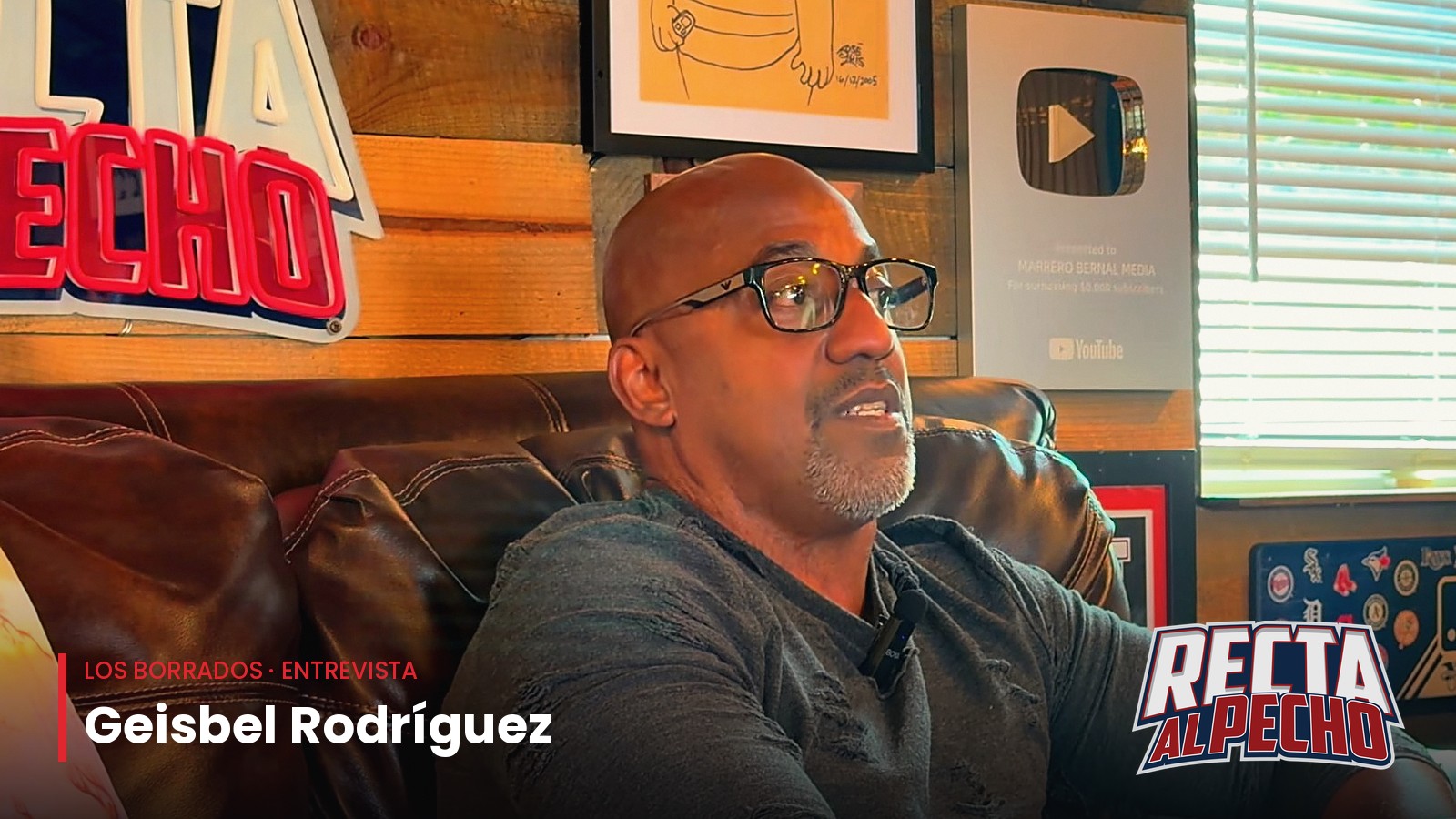
The least suspect witness possible says so — Eduardo Paret, in our interview, still amazed:
“Ordóñez, who wasn’t even Mesa’s shadow over there… and he made the big leagues! What a tremendous performance he had. That many games without an error isn’t easy even playing on a computer.”
The “shadow’s” record in the majors: three straight Gold Gloves — 1997, 1998 and 1999.
Between 1999 and 2000, a run of 101 consecutive games without an error — in a season with just four miscues and a .994 fielding percentage that many consider the best defensive season by a shortstop in big-league history.
Not in Cuban history: in the history of real baseball.
And here we have to defuse the trap the myth sets right away: “if the shadow did that, imagine what Mesa would have done.”
No, folks.
That is exactly the magical thinking this series came to bury.
What Ordóñez proved in the majors wasn’t just glove work — it was the tool you can’t see from the stands: adaptation, discipline, resilience to everyday failure, nine years surviving at the level where talent is just the price of admission.
Ordóñez proved that tool with records. Mesa never proved it.
And what goes unproven isn’t inherited through imagination.
And what about the famous quote in which Ordóñez himself supposedly said “Mesa was better than me, the best one is in Cuba”?
We did with it what we did with Linares’s phantom offers: we went looking for it in the record.
It doesn’t exist.
There is no interview, no recording, no outlet that published it with a date and context.
It’s another bill from the same counterfeit press: the perfect quote everyone repeats and nobody can produce.
Tito Fuentes breaks down the Germán Mesa vs. Rey Ordóñez debate.
Also watch our full interview with Eduardo Paret.
Paret: the one who beat Mesa on the only objective field
So far, Mesa’s throne has lost to technical judgment — Tito — and to the acid test — Ordóñez.
The third defeat remains, and it is the simplest of all: the numbers from the Serie Nacional itself.
I’m an Industriales fan, and I say so before the numbers so nobody accuses me of reverse regionalism: baseball stirs passions and passion leads to blindness, but the statistics say it all.
Let’s compare their full careers (Eduardo Paret vs. Germán Mesa):
- Career batting average: Paret .293 — Mesa .285
- On-base percentage: Paret .405 — Mesa .386
- OPS: Paret .829 — Mesa .809
- Home runs: Paret 139 — Mesa 112
- Hits: Paret 1,878 — Mesa 1,239
- Fielding percentage: Paret .972 — Mesa .964
And add to that Paret’s 474 stolen bases — third all-time in Serie Nacional history.
“Well,” the Magician’s fan will say, “but Germán’s thing was the glove.”
Then hold on, because here comes the number nobody in Mesa’s camp wants to look at:
Career fielding percentage: Paret .972 — Mesa .964.
Paret’s isn’t just better than Mesa’s: it is the best career fielding percentage of all time for a Cuban shortstop — 261 errors in 9,223 chances over 21 seasons.
In other words: in the only objective defensive measure that exists in the Cuban records, the Magician loses too.
What Mesa had was spectacle — real, beautiful, unforgettable.
What Paret had was efficiency.
And championships are won with the second.
The four stolen years
Because in the prime of his career, the system did to Eduardo Paret the same thing it did to so many in this series.
He was sanctioned — along with other Villa Clara players — on the accusation of having spoken on the phone with Rolando Arrojo after Arrojo left Cuba.
No trial, no evidence, no end date:
“Ours, according to what they told us, was indefinite. I do know what it’s like to be suspended and out on the street, where everybody turned their back on you. One day I went to practice at the Sandino and they threw me out — I couldn’t even set foot on a field. Those were four years of my career that would have put up better numbers.”
Four years in his prime, erased over a phone call that was never proven.
And even so — cut short by the punishment, and later playing on into the declining years that dragged his averages down — Paret finished ahead of Mesa in every column.
Ask yourself the full question: how big would those numbers be with the four years given back and without the twilight of his career?
Mesa also lost seasons to his own 1996 suspension, it’s true — and that is why this article compares both men’s complete careers, wounds included.
The result doesn’t change: a sweep.
One detail that honors them both, and that I want on the record: I asked Paret about his rivalry with Mesa, and there wasn’t a drop of venom:
“We got along well, we talked, I never had any bad blood with him, nor he with me.”
This case file isn’t against Germán Mesa the man.
It’s against the throne they built for him.
So why does everyone say Mesa?
Because popularity has its own machinery, and Mesa’s was perfect.
He played in Havana, for Industriales — the team of power and of the press — at the Latinoamericano, one of the biggest baseball stadiums in the world.
And Cuban television, which decided what baseball the country got to see, broadcast Industriales games with a preference no Villa Clara player ever dreamed of.
Fifty-five thousand throats and a national signal shouting “Mago!” every time he broke late on a routine grounder.
Paret, meanwhile, was piling up better numbers 300 kilometers from the cameras.
That isn’t a conspiracy: it’s television geography.
But it produced the mirage we now call consensus.
Germán Mesa is, beyond argument, the most popular and most spectacular shortstop the Serie Nacional ever produced — and nobody is going to take that title from him, because the memory of the stands belongs to him.
Best is a different title, and it is contested on a different field.
On the field of technical judgment, Ordóñez holds it, in the words of an evaluator with thirty years on American networks.
On the field of real proof, Ordóñez holds it with three Gold Gloves and the big-league record.
And on the field of the Cuban league’s own numbers, Paret holds it in a sweep — hitting, getting on base, stealing and even fielding.
The popularity belongs to Mesa.
The numbers belong to Paret.
The proof belongs to Ordóñez.
And the myth, as of today, is filed where all the myths in this series go: on the list of things Cuba repeated so often it forgot to check them.
This article is part of our series on the myths of Cuban baseball. Also read: The myth of the invincibles and Linares or Gurriel? The myth of the superstar who was never tested.
The full interviews with Tito Fuentes and Eduardo Paret are available on our YouTube channel. Figures cited in this article come from Serie Nacional records, Baseball-Reference and the Society for American Baseball Research (SABR).
Originally published in Spanish on Recta Al Pecho.