
Aug 14, 2026 · By Eliam Marrero Bernal
They took four years from him over a phone call. He still doesn’t know who gave the order
By the numbers, Eduardo Paret is the best shortstop the Serie Nacional ever produced. He was banned in his early twenties with no proof, no trial and no end date. Today he coaches kids in Miami.
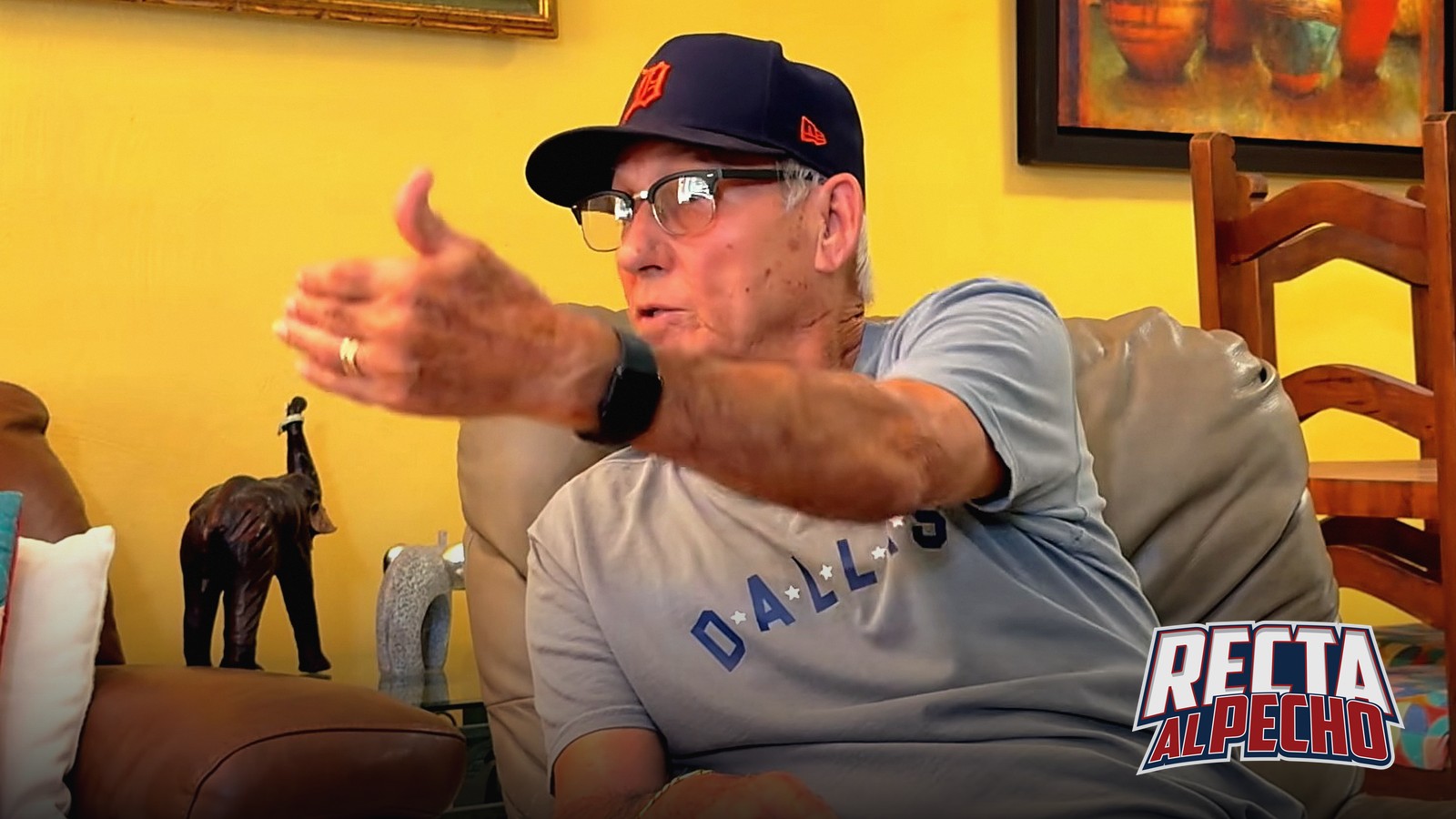
Eduardo Paret was, by the numbers, the best shortstop the Serie Nacional — Cuba’s National Series — has ever produced. He was in his early twenties when they removed him from baseball with no evidence, no trial and no return date. Today he coaches fifty kids in Miami and still says he would play for Cuba.
Let’s start with what can be measured, because in this case the numbers are part of the story, not decoration.
I’m an Industriales fan, but I’m not blind. Baseball stirs passions and passions blind you, so let’s go to the averages, which don’t argue (Paret vs. Germán Mesa):
- Batting average: Paret .293 — Mesa .285
- On-base percentage: Paret .405 — Mesa .386
- OPS: Paret .829 — Mesa .809
- Fielding percentage: Paret .972 — Mesa .963
Add to that the fact that Paret is third all-time in stolen bases in Serie Nacional history, and that he played five more seasons than Mesa.
Five more. Even though they took four away from him.
The day they wouldn’t let him onto a field
Of everything Eduardo Paret told me in Miami, there is one scene that stuck with me, and there is nothing dramatic about it. It’s a man standing at the gate of a stadium.
Suspended, without a team and unable to practice, Paret went to the Sandino one day to get some work in. Ávila was there. They sent word that he couldn’t be there.
“I do know what it’s like to be suspended and out on the street, where everybody turned their back on me, everybody pushed me aside.”
That is the real punishment. It isn’t the suspension: it’s that the whole country learns to look the other way when you walk by.
The accusation
What had Eduardo Paret done?
Nothing anyone has ever been able to prove. The accusation was that he and other players on the team had talked on the phone with a countryman who had already defected to the United States.
“What they told us was that we had talked on the phone… There were people who said they had talked in Santa Clara, at the players’ house. Now there, yes, a lot of people did. But funny how the ones they sanctioned were the team’s top players.”
There’s the detail that says it all. If the crime was talking on the phone, a lot of people talked. The ones who paid were the stars.
Paret wasn’t even 25. He was just getting started.
“You don’t do that to a kid. Back then I was twenty, twenty-two. I was just starting my career, and then I spent four years out.”
And when I asked him who gave the order, his answer was the same one others have given me:
“I never found out. I mean, we know it was someone from State Security, someone doing their job, as I put it. But you don’t do that.”
He brought up Anglada’s name himself
In the middle of the conversation, without my asking, Paret put his finger exactly where it belongs:
“Like what happened with Anglada, who had nothing to do with it. And the bad thing about it is that there’s no evidence.”
It is the third time in this series of interviews that a Cuban ballplayer has told me, on his own, the same thing about another Cuban ballplayer.
Anglada. Marquetti. Now Paret. Three different generations, three different provinces, the same mechanism: the accusation first, the evidence never.
You can read the full case file in The last out of Rey Vicente Anglada →
The sanction had no end date
Here is a fact worth underlining, because it explains how punishment works in Cuba better than any analysis:
“Ours was, according to what they told us, indefinite.”
Indefinite. No release date. In other words: it wasn’t a sentence, it was a condition.
One day they told him to get ready, that he was going to play. Then they took it away again, without explanation. He ended up sitting out the entire season.
And when they finally lifted it, they didn’t tell him why either. The version that reached him — which he repeats cautiously, as something he was told — is that the interest came from very high up.
“Yes, that’s the story they told me.”
In Cuba you know when a sanction starts. You never know when it ends, or who decided either one.
Watch the full interview with Eduardo Paret.
What hurts most: he never even considered it
And here is the part that turns this story into something worse than a sporting injustice.
Scouts chased Eduardo Paret from the time he was a kid. Since 1988, in Mexico, when he was fifteen. After the World Junior Championship at seventeen. And at the 1996 Atlanta Olympics, past twenty, when El Duque, Liván and Ordóñez had already opened the way.
I asked him if he ever considered it.
“I never thought about it.”
That is what you have to understand. The man they accused of talking with the ones who left was, of all of them, the one least thinking of leaving.
They punished him for four years for a disloyalty that didn’t exist, while offers passed right by him that he didn’t even look at.
He came back. He kept playing. And he became captain of the national team again.
No grudge against Germán Mesa
I asked him about Germán Mesa, because he carried that comparison his whole career and because the numbers prove him right.
The answer is disarming:
“Personally we got along well. Apart from being opponents on the field… I never had any bad blood with him, and he didn’t with me either.”
And that, far from weakening the story, sharpens it. Because it means what they did to Paret wasn’t a rivalry between two ballplayers. It was a decision made above both of them, in an office, for reasons that had nothing to do with baseball.
“They were wrong”
Today Cuban players come and go. They sign abroad, come back, play in the Serie Nacional. I asked Paret how he feels seeing that.
His answer wasn’t bitter. It was worse: it was fair.
“I think it’s good, whoever wants to play should be allowed to play, because that has nothing to do with anything. But it’s so they can see what they did to us, which was wrong.”
And he finished with the line no Cuban official has ever said to his face:
“They’re correcting it because they know they were wrong.”
Correcting without admitting. It is the same pattern we saw with Anglada, who was put back on the Industriales bench without anyone ever apologizing to him.
In Cuba, mistakes aren’t corrected: they quietly stop being made, and everyone hopes nobody does the math.
Miami: a warehouse, a borrowed field and fifty kids
Paret came to the United States on a visa. He had been coming since 2015; in 2019 he brought his family, and COVID kept them here.
He started his academy in a warehouse lent to him by a man from Las Tunas. Then a former coach from Sancti Spíritus named Fran took him in at a field, until Fran fell ill and Paret took over the kids.
Today he has almost fifty. And the problem isn’t a lack of talent:
“The field above all is a hard thing. I have three or four teams here and they give me a field two or three times a week.”
In the mornings he works somewhere else. At that job you have to leave your phone at the entrance and you can’t touch it until you leave. The captain of Team Cuba, putting his cellphone in a drawer to earn his day’s pay.
“It’s hard to get used to. I’d never worked so hard. But you do all this for your kids.”
His mother, his siblings, his aunts and uncles and his cousins are all still in Cuba. Here he has his wife and his three children. His girls are turning fifteen and he is busy with the photos and the preparations for their quinceañera.
And still he would play for Cuba
I asked him the question I ask everyone, knowing what they had done to him.
“I would play for the national team. I’d like to see a Cuban team like when we played.”
I gave him the only honest response I could think of: that at the time of his suspension, when they turned their backs on him, the Cuban people didn’t defend him.
He didn’t argue. He just made clear that he respects those who say no today.
And he told me what he does every time he goes to the island: he packs two or three little gloves in his suitcase to leave for the kids there.
“Because I went through that hardship too.”
Four years of his career were taken from him over a phone call nobody proved. He never found out who signed off on it. Nobody ever apologized to him.
And he keeps bringing gloves.
Interview conducted by Eliam Marrero Bernal for Recta Al Pecho. Eduardo Paret’s statements are taken verbatim from the recorded conversation, available in full on our YouTube channel.
Originally published in Spanish on Recta Al Pecho.