
Sep 7, 2026 · By Eliam Marrero Bernal
Braudilio Vinent turned down millions, stayed in Cuba, and this is what he got
The Meteor of La Maya rejected the scouts and dedicated every win to the Revolution. Today, at 70, he shows his medals to the camera so someone will remember he is alive.
After six escape stories, this is the story of the one who stayed.
The Meteor of La Maya said no to the scouts, gave all his victories to the Revolution, and today, at seventy, shows his medals to the camera so someone will remember he's alive.
On this site we've told the stories of those who left. Liván slipped away in Monterrey. Osvaldo climbed a glass-topped wall in Curaçao. Soler spent six months moving from one hideout in the woods to another until the boat came in.
This is the other story. The story of the man who stayed.
And it's worth reading to the end, because it answers a question that hangs over all the others: what happened to the one who did what the system asked? The one who said no to the millions, who dedicated every win to the homeland, who held up his end?
The answer lives in La Maya, is seventy years old, and broke into tears twice during the interview.
The Meteor
First, who he is.
Because the younger generations have stopped being told, and that's part of this story too.
Braudilio Vinent is one of the greatest pitchers Cuba has ever produced. The Meteor of La Maya. Team Cuba's No. 35 for almost two decades of absolute dominance in world amateur baseball: world championships, Pan American Games, Central American Games.
At the 1980 World Cup in Japan, Cuba finished unbeaten with ten wins, and the title came down to a razor-close game against the hosts: one to nothing.
Antonio Muñoz hit the home run. The superb pitching was Vinent's.
“Just one run and we've won. Get me just one.”
That line was his signature.
Give the Meteor one run and the game was over.
The country boy who hunted guinea fowl
His arm didn't come out of any academy.
It came out of the backcountry.
“I lived in the backcountry. I'd go out and hunt guinea fowl by hand. They'd fly off and I'd throw at them on the wing. Sometimes I'd hit them, sometimes I wouldn't.”
A boy throwing rocks at birds in flight, in Jarahueca, following his mother to the coffee harvest.
Ana Serrano and Marcos Vinent, country people, working people; she was the tough little old lady he followed every step of the way.
From there to the bare-handed sandlot leagues on the little fields of La Maya, and from there, because, as he puts it, he threw 90 mph as a country kid, to the juniors and to the first category, where, by his count, he won sixteen games in his first year.
“They were dying to sign me”
Here's the moment of decision, told by him without the slightest drama:
“They were dying to sign me. The thing is, I didn't want anything.”
The scouts saw him. The Dominicans who dug into the batter's box trying to act tough found out up close.
The teammates who later reached professional baseball told him to his face:
“Man, you were big-league material.”
And he said no.
Every time.
With a line he repeated for decades and still repeats today, his voice breaking:
“They put all the millions out there and I said: no, the victory is for my Cuba.”
That was the deal. He kept his end of it in full.
The wall
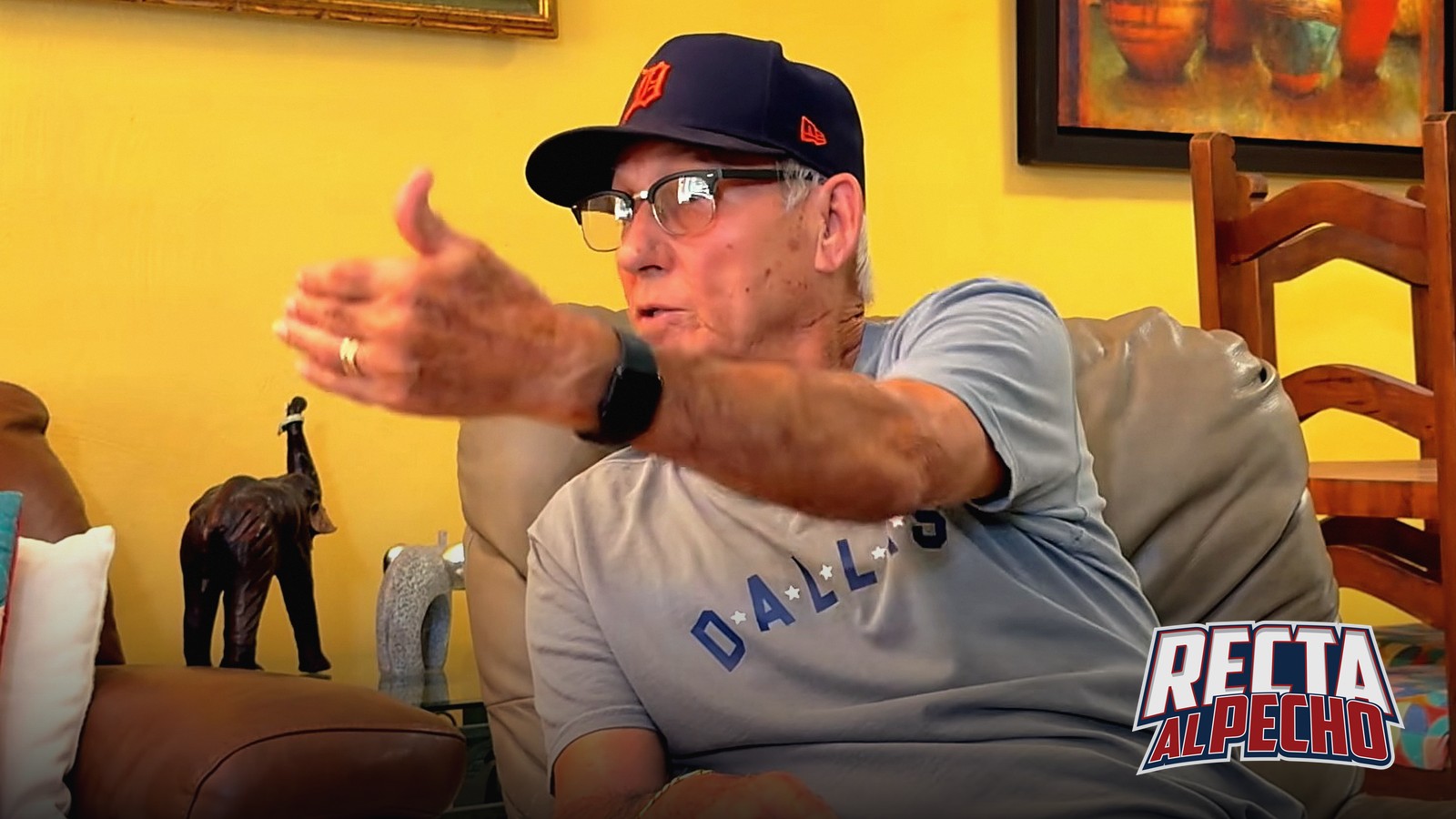
In his house in La Maya, Vinent has a wall.
It's the archive of his life, and it's also the proof behind his claim.
There are the medals: world championships, Pan American Games, everything.
And there are the photos: with Fidel, with Raúl, with Almeida, with Comandante Villanueva, with Ramiro. Him on the front page, beside the bosses, in the days when the Meteor was Team Cuba's sure thing.
“Look, there it is. Comandante Villanueva, Ramiro, Raúl. There it is, on the front page. And here I am. And it's not wrong to say it. I have to say it, because I'm the one who's suffering.”
That wall is the most brutal contrast that has come through this channel.
Because the man in the photos with the comandantes is the same man who says this today:
“For me it's hard to go over there to buy a little rice and everything. But anyway, I'm not complaining about that.”
“Nobody comes here”
What Vinent is asking for isn't money.
Listen closely, because he makes a point of clarifying it again and again, with the dignity of the man who, in his words, deserves and so does not ask:
“I'm not asking for charity. I'm not going to sell a medal, I'm not going to sell anything.”
What he's asking for is something else.
More basic, and more serious:
“Nobody even comes to visit me here. Who comes to bring my kids an engaño, so they can see what their dad…? Not even that.”
An engaño.
In country Cuban, a little something: a kind gesture, a token.
Not even that reaches La Maya.
None of the people in the photos on that wall, none of the institutions that hung those medals on his chest, stops by to see whether the Meteor is alive.
And then he said the line that strikes me as the real title of this interview:
“I want them to keep me in mind. To remember the joy and the excitement I gave the people of Cuba and all Cubans. To know that I'm alive, that I haven't died.”
A two-time world champion asking someone to confirm that he exists.
The teacher they pushed aside
There's one more layer to this neglect, and it may be the most absurd of all: Cuba didn't just stop looking after Vinent as a legend.
It stopped using him as a resource.
The man lives surrounded by Santiago's pool of young talent. He sees the kids, sees the arms, sees the raw talent he himself was sixty years ago.
“The talent is there. There are kids with plenty of quality. The thing is, there are few coaches and nobody follows up with them. I tell the officials: this is your future.”
And what about him, who starred for two decades on Team Cuba, who led the pitching staff alongside Rogelio García and Julio Romero?
“They push you off to one side. I don't even go over there.”
The country that complains its baseball is collapsing has one of its greatest teachers sitting in La Maya, and doesn't call him.
Not a word against those who left
Take note of this, because it speaks to the size of the man: in the entire conversation, Vinent didn't say a single word against the players who left.
Not against the ones who signed for millions.
Not against anyone who took the road opposite his own.
His complaint points entirely in another direction:
“There are a lot of officials here who don't like sports. They should worry a little more about the sports legend who gave everything.”
And at one point, looking into the camera, he delivered the message directly, with no one in between:
“They know I'm here. The ones who are still there know I'm here. Family has to be looked after. Braudilio Vinent has to be looked after.”
Two sides of the same coin
This archive already holds the story of Yadel Martí, who posted a 0.00 ERA at a World Baseball Classic and was erased for losing one game.
The story of Eduardo Paret, who lost four years over a phone call.
The story of Osvaldo Fernández, who rode to the Latino to pitch hanging off the side of a bus.
All of them left, and the system called them traitors.
Vinent stayed.
He did everything the official rhetoric demanded: he turned down the millions, dedicated the wins, posed for the photos.
He was, in his own words, the sure thing.
“I was the sure thing. And for them to abandon you like that…”
And he ended up the same as them:
Erased.
That is the conclusion this archive has been documenting for months, interview by interview, and Vinent's story seals it:
It didn't matter whether you left or stayed. The system didn't reward loyalty, nor did it punish only defection. It simply used you, and when it was done using you, it let go.
The difference is that those who left at least got something back for what they gave.
The one who stayed was left with a wall.
“If I die, I die with the feeling of having seen things”
May this article serve the only purpose he asked for:
Let it be known that Braudilio Vinent, the Meteor of La Maya, Team Cuba's No. 35, is alive.
And that Cuba, the Cuba inside the island and the Cuba outside it, owes him much more than a little engaño.
Interview conducted in Cuba by the Recta Al Pecho team, with questions and direction by Eliam Marrero Bernal. Braudilio Vinent's statements are taken verbatim from the recorded conversation, available in full on our YouTube channel.
Originally published in Spanish on Recta Al Pecho.