
Sep 1, 2026 · By Eliam Marrero Bernal
A scout walked into his hotel at night with a briefcase: “Here’s $50,000, and two million is waiting for you.” Antonio Scull said no
The Industriales and Atlanta ’96 first baseman turned down a briefcase of cash and $20 million from the Mets. Today his son Anthony is climbing the Angels’ system, chasing what his father let go.
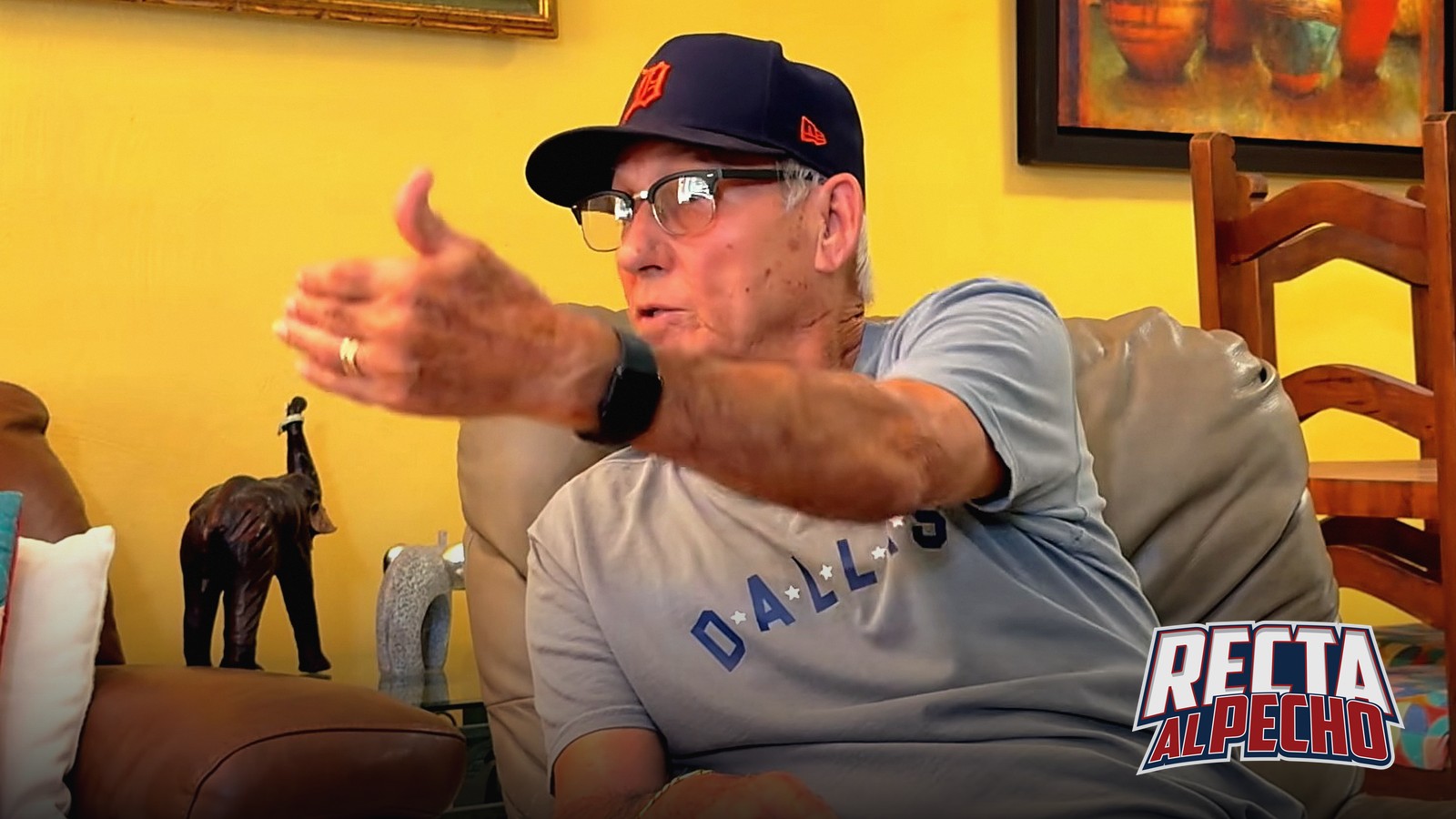
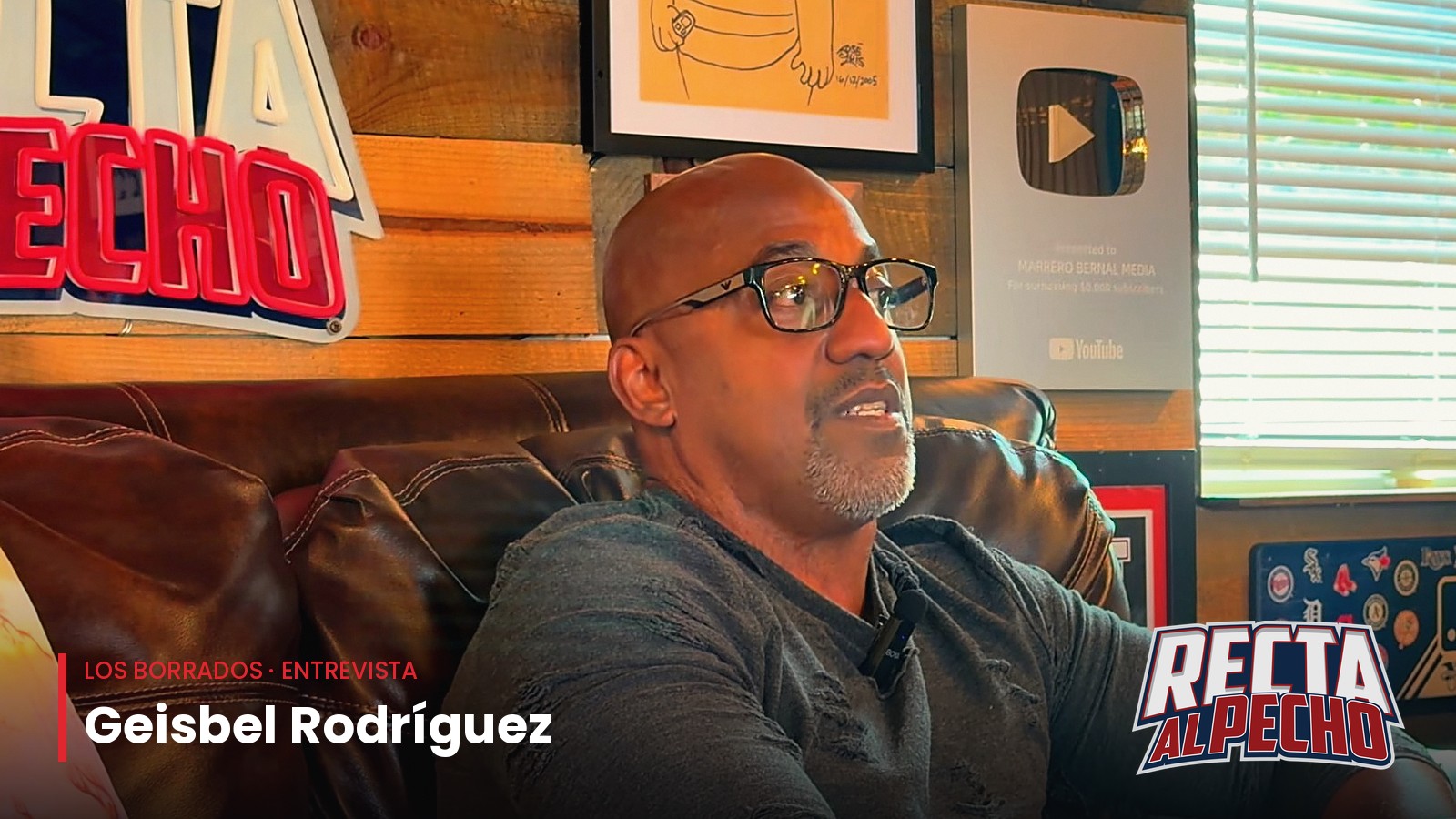
The first baseman for Industriales and for Cuba’s 1996 Atlanta Olympic team told us, from his home in San Miguel del Padrón, about the offers he turned down — including twenty million dollars from the Mets. Today his son Anthony is climbing the ladder in the Angels organization, chasing exactly what his father let go.
Antonio Scull didn’t know what a scout was.
You have to understand that first, because it explains the whole scene. A kid from La Cuevita, in San Miguel del Padrón, raised in a baseball culture where the word “scout” was never spoken, is at an exhibition series against the Americans when a stranger starts chatting with the group. Juan Padilla walks over and tells him quietly:
“Líquido, that’s a scout. Get out of here before they see you, before they think you’re going to stay.”
Scull left. But the man found him that night, at the hotel. And he didn’t come with words: he came with a briefcase.
“He told me: two million dollars. And he came with a briefcase: look, here’s $50,000, send it to your mom, to your family, and stay here with us.”
Fifty thousand dollars in cash, on a hotel bed, in front of a Cuban ballplayer in the 1990s.
“And I told him no.”
Twenty million
And that wasn’t even the biggest thing he turned down.
“I went to the Olympic qualifier in ’95 and that’s where they scouted me, offering twenty million dollars to play for the New York Mets.”
Twenty million. From the Mets. In 1995.
The reason he said no fits in one sentence, and it is the most Cuban reason of all:
“At the time I didn’t want to because my mom was alive, I lived with my mom. Feelings were different back then than they are today.”
It wasn’t the Revolution. It wasn’t fear. It was his mom.
In this archive we have already heard that same reason in other words: Lázaro Junco’s whole family crying in the living room, Osvaldo Fernández’s father holding the photo of his grandmother.
The Cuban system didn’t need bars to hold on to its ballplayers. The family dinner table was enough.
The racket nobody talks about
Then we asked him about a rumor that has been around for decades: that some players took money from scouts, promised to defect at the next tournament… and never did.
“Yes, yes, it happened on several occasions. I knew who took a little something and talked about how it would happen at another event. They gave the money and in the end we didn’t stay. Several players went through that.”
No names — Scull is a gentleman — but full confirmation: inside that supposedly “amateur” and “pure” Cuban baseball, big-league money was flowing under the table, and some players learned to milk it without ever jumping the wall.
Watch the full interview with Antonio Scull.
Chaguito, the kid from La Cuevita
Who was the man who turned down the briefcase: a left-handed slugger who got called something different in every ballpark in Cuba.
“They called me el Líquido, el Charanguero Mayor. In Las Tunas they called me Escurculú. In Santiago they called me Negra, Chivapeta… all kinds of things.”
Nine years with Metropolitanos — the team nobody wanted to exist and that its players didn’t want to leave — playing right field first until an injury moved him to first base for good.
Two years on a star-studded Pinar del Río club, sharing a clubhouse with Linares, Casanova, Faustino Corrales and Lázaro Madera. And from there to the Atlanta ’96 national team, with stops at three Olympics and Pan American and Central American titles.
Atlanta gave him the sweetest moment of his international career. He came up as a pinch hitter and from the stadium crowd someone yelled:
“Chaguito!”
“I had to ask the umpire for time. I was born in San Miguel del Padrón, in La Cuevita, and my aunts named me Chaguito. Whoever yelled that was from San Miguel del Padrón, because outside my neighborhood nobody knows that.”
He called time at the Olympic Games to wave to the stands. When he got back to the dugout and they asked who he was waving at, the answer was perfect:
“That’s the neighborhood.”
Cleanup behind Linares
We asked him about the biggest moments of his career, and the first one he mentioned wasn’t a home run. It was a lineup card.
“Jorge Fuentes batted me cleanup behind Linares. For me that’s the biggest thing that ever happened to me in baseball.”
Hitting behind Omar “El Niño” Linares was the most expensive seat in Cuban baseball, and Fuentes gave it to him with a single instruction: relax, keep playing your game.
Then came Industriales, and another dizzying night: showing up to practice and finding Germán Mesa, Padilla, Lázaro Valle and Javier Méndez as teammates.
“For me that was the ultimate.”
That Industriales team set the record of 66 wins — with Kendrys Morales and Bárbaro Cañizares on the roster — and did something Scull believes will never be repeated:
“We played with nine left-handed players. I don’t think any team here in Cuba will ever be able to pull that off.”
An entire lineup of lefties. Nine. And winning.
Anglada’s law
There is a detail from that era that connects directly to the first article in this archive. On that Industriales team there was an unwritten law: you don’t greet the opponent on the field.
“Anglada brought that law. He said: what I want is for you to do me the favor of not greeting the other team on the field. When it’s over, you can go out and party, drink whatever you want. But on the field, no.”
The same Rey Vicente Anglada whose story of vindication we told here. His disciples still quote his laws from memory, thirty years later.
Contreras’s beanball and the hit that never came
Velocity didn’t bother Scull. Lazo, José Ariel Contreras, Arrojo, Lázaro Valle, Orlando Hernández — he hit all of them. And he hit Contreras so well that the friendship turned into a problem:
“Contreras was my friend, and one day he got upset and threw at me twice. Afterward we talked. ‘The problem is you hit me too much.’ And what do you want? You’re the pitcher and I’m the hitter — your job is to get me out and mine is to hit you.”
His kryptonite? A man who didn’t throw heat: Faustino Corrales.
“In twenty years I only managed to get one hit off him. The curveball he had was huge.”
One hit in twenty years. Cuban baseball’s numbers hide duels like that, which nobody recorded and which live only in the memory of those who fought them.
The ball that got away from Enriquito
And we have to talk about the most bitter moment, because Scull faced it head-on: the famous play against Pinar del Río — Enriquito’s throw, the ball that gets away, the loss — for which half of Havana blamed him for years, saying he didn’t want to catch the ball.
His defense is forensic in its precision:
“If you can watch the video, you can see the throw was wide. I went to step on the bag and I was wearing a pair of black spikes with very thin cleats, and my foot slipped. I couldn’t catch the ball. Enriquito didn’t want it to get away, and I didn’t want to miss it. That error is part of the game of baseball.”
A slip of the spikes. Decades of public blame for a slip.
His advice for any kid who goes through something like that in a decisive game: keep your head up, baseball has hits and it has errors, and go out there and turn it around.
The briefcase, second generation
And here is the ending life wrote for this story, better than any screenwriter could.
The man who turned down twenty million from the Mets has a son: Anthony Scull. And Anthony is now in the Los Angeles Angels organization, climbing the minor-league ladder toward Double-A — the gateway to the big leagues.
“I got to talk with him last week. He told me: ‘Papi, now it’s going to get a little tougher.’ I told him: not tough. What you have to do is focus on what you’re going to do. If you want to reach a goal, you have to focus on that.”
The father said no to the briefcase because of his mom. The son went after, with permission and on a plane, exactly what his father left on that hotel bed.
Two generations, the same blood, two different Cubas — and the advice of the one who stayed pushing the one who left.
“Until the day I die”
Scull is retired and went back on his own, without anyone calling him, to coach kids ages 11 to 14 in his municipality. And together with Padilla, Javier Méndez and other legends, he proposed to the provincial leadership creating an academy at the Ciudad Deportiva staffed by the capital’s living greats.
“They said they would let us know, and to this day nobody has said anything.”
It is the same silence Braudilio Vinent found in La Maya and that Lázaro Junco denounced in Matanzas: the country that watches its pitchers average 82 miles per hour has its teachers sitting at home, offering to help for free, with nobody returning their calls.
And even so, Scull’s last words in our interview were these:
“I’m willing to work in baseball until the day I die.”
A man who had fifty thousand dollars put in his hand and said no, offering Cuba the only thing he has left — his knowledge — and still waiting for an answer.
The neighborhood, at least, never stopped yelling Chaguito.
Interview conducted in Cuba by the Recta Al Pecho team, with questions and direction by Eliam Marrero Bernal. Antonio Scull’s statements are taken verbatim from the recorded conversation, available in full on our YouTube channel.
Originally published in Spanish on Recta Al Pecho.