
Aug 7, 2026 · By Eliam Marrero Bernal
The Man Who Froze Cuba With One Swing Rode His Bike Home From the Ballpark
Agustín Marquetti hit the most famous home run in Cuban baseball history. Now nearly 80 and living in Miami, he says: “If I were in Cuba, I'd have been dead nine years ago.”
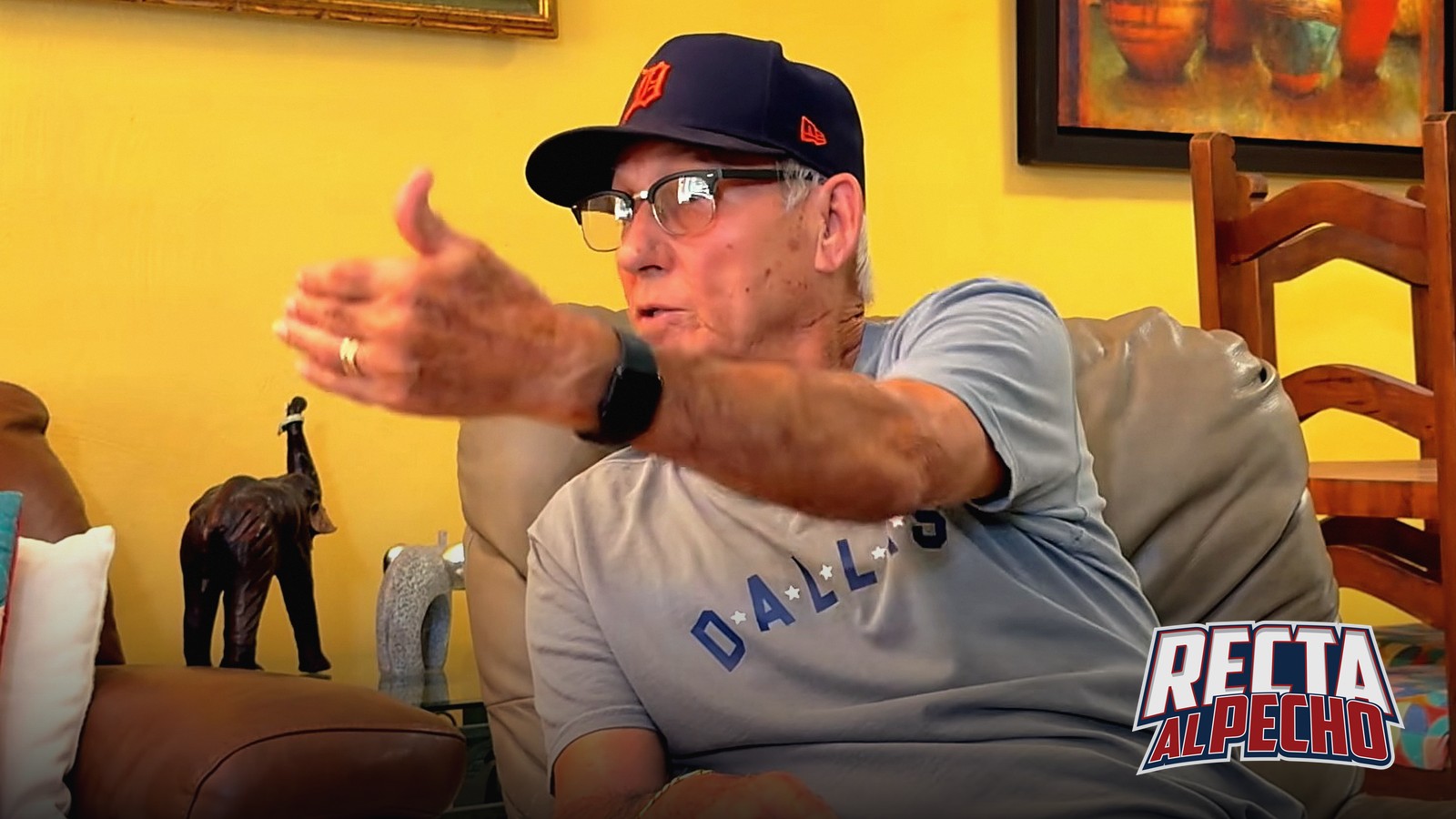
Agustín Marquetti hit the most famous home run in the history of Cuban baseball. Today he's nearly eighty, lives in Miami, and told me something I haven't been able to get out of my head:
“If I were in Cuba, I'd have been dead nine years ago.”
There's a recording that every Cuban of a certain age can recite from memory, word for word, the way you recite an anthem:
“It's headed to deep right field. The ball is going, going, going. A home run by Agustín Marquetti. The championship is over.”
And then, what came after:
“This is madness at the Latinoamericano. Thousands of fans are pouring onto the field.”
Marquetti couldn't make it to home plate. The crowd swallowed him first. The man who had just decided a championship couldn't touch the plate because his own people devoured him out of sheer emotion.
Now hold on to that image.
And hold on to this other one too, because both are true and both happened in the same life: the cleanup hitter of the Cuban national team rode to the ballpark on a bicycle.
The leftover number
The first thing you have to understand about Marquetti is that nothing he had was handed to him.
He came up as a rookie to Industriales from the second division, in the sixties, when Cuba had six teams and three standout kids moved up each season.
They told him to pick a number.
“The ones I liked were 17 and 3, but Chávez had 3, Pablo had 17. Give me 40.”
Forty was what was left.
And he told me what he thought at that moment, to himself, without telling anyone:
“I'm going to make that number.”
He did.
Today in Cuba you say “Industriales' number 40” and there's no need to add the last name.
He brought that mentality from the team bus. The rookies —“the Rockys,” they called them— rode in the back, standing, while the stars had their own seats. They hit last in batting practice, after the monsters had already left.
“I'd say to myself: Chávez, Urbano, all the monsters had a seat to themselves. I'm going to have a seat to myself.”
You had to ask for the glove
Here's a part of Cuban baseball history almost nobody tells, and Marquetti told it without any drama, like someone describing the weather.
The first Wilson glove he ever had wasn't given to him by the Cuban state. He asked a foreign first baseman for it, a lefty, at an international competition.
“Brother, you won't get mad if, after this is over, you give me the glove.”
The answer was:
“No, Marquetti, no problem.”
And he gave it to him.
His first spikes, the same: he asked a player from abroad for them, eyeing his feet to check the size. The first baseman's mitts, the same.
“The ones who helped me the most were the Puerto Ricans.”
The cleanup hitter of the Serie Nacional —Cuba's National Series— asking his rivals for shoes.
And then people wonder why that generation is expected to compare its numbers with today's.
“So-and-so was a beast, and he was a beast with a wooden bat, he was a beast sleeping in dorms, he was a beast riding the bus.”
He made himself a first baseman by doing the math
There's one episode that seems to me the best definition of who this man is.
Marquetti played right field and knew he wasn't good there. He looked at the landscape: Cuba had outfielders to spare, and at first base was Sardiñas, of the national team.
He ran the numbers coldly.
“If I stop playing right field and start playing first, I think I can be the first baseman for the Cuban team, because the only thing Sardiñas does better than me is field. I run well, I'm a better hitter than him.”
He put down the glove, picked up the first baseman's mitt and took ground balls until the coaches were worn out.
“I took a hundred ground balls every day, a thousand ground balls.”
Pan American Games in Cali, 1971. First baseman for the Cuban national team.
Agustín Marquetti, first baseman for Industriales and the Cuban national team.
The day he cried in a warehouse
In 1980, at thirty-three, Marquetti decided to retire.
Comandante Fernández called him to convince him to keep playing. And he asked for something a player of his stature in any other country would never have had to ask for: a car.
They told him not a new one, a used one. He accepted.
He went to the warehouse.
“The FSO lot down there is a whole block, an enormous block. I look over there and I can't believe it: almost-new cars, new cars. And this guy tells me there aren't any.”
They handed him an old, blue Polski, dented all over.
“I cried like a little kid.”
The best pinch hitter of his generation, crying in a state warehouse over a used car, while in the back the new ones that were meant for other people gleamed.
Six years later he hit the home run that brought the country to a standstill.
And then, yes: the son of a party official spoke to his father, the father spoke to Fidel, and Marquetti was given a Lada 2107.
That's the system, captured in a single sequence.
They don't pay you for what you are. They reward you when you're useful to them.
And even with the 2107 it wasn't enough. Marquetti drove an unlicensed taxi. The national idol went out in his car carrying people for ten Cuban pesos, and one day a cop pulled him over.
“Buddy, what am I going to do? What they give me isn't enough.”
The cop recognized him and didn't take anything from him.
“They said I was with the apparatus too”
Here Marquetti, of his own accord, touched the most delicate subject his generation carries: suspicion.
“They used to say I was with the apparatus too. ‘Marquetti, State Security captain.’”
And he explained where it came from, which is disarmingly simple: coming out of the juniors, he was given the choice between military service, which paid seven pesos, and playing for the Interior Ministry team, which paid a hundred and twenty-five.
He chose the hundred and twenty-five. Like anyone would have.
“Nobody can say I ever ratted anybody out for anything.”
He was the one who brought the other name into the conversation:
“It happened with Anglada. At first, poor guy, and then that he was with the apparatus, and the years he spent in prison.”
It's exactly the mechanism we documented in the case of Rey Vicente Anglada: a system that first forces you to belong and then uses that belonging to brand you.
And when you're no longer useful, it lets rumor do the work no court ever dared to sign.
The warning nobody wanted to hear
In 2000, Fidel sent Humberto —then in charge of sports— to meet with figures from different disciplines.
Marquetti got his turn to speak.
And he spoke:
“If we don't change the policy toward coaches and athletes —in volleyball, baseball, boxing, track and field, basketball— we're going to be left without coaches and without athletes.”
The answer was that it couldn't be done.
A quarter century later, the Serie Nacional is played in daylight because there's no electricity, with the Latinoamericano empty because there's no transportation to get there.
Marquetti watched it on TV from Miami and didn't say “I told you so.” He just took note.
“I'm alive because I'm here”
Marquetti arrived in the United States in 2010, past sixty.
And he told me something that carries particular weight coming from him, because this is a man who was formed, trained and decorated by the Revolution:
“Who would've told me I was going to be an American? Unthinkable. If you thought of yourself as American, you were a gusano, a traitor.”
Then came the line that gives this conversation its title, which he said without raising his voice, with the calm of someone who has already done the math:
“If I were in Cuba, I'd have been dead nine years ago, because the operation they did on me here, in Cuba they weren't going to do it.”
Today he lives on a low-income assistance plan: they help him with rent, with food, with medicine. He has a car, he has gas, he plays dominoes every afternoon at five.
“I have more now than when I was famous in Cuba.”
And there's a line of his that sums up half a century of Cuban politics in a single breath:
“The guy living best in the United States is me. I'm living the best old-man package there is.”
The pork leg
In 2023 he went back to Cuba to fix up his house.
He had three twenty-year-old kids helping him. Marquetti, who loves to cook, bought a leg of pork, made rice, made black beans, and sat them down at the table.
That meal cost him eighty dollars.
One of the kids looked at him and said:
“Marquetti, excuse me, but it's been more than five years since I've known what this is.”
Here he stopped the conversation for a moment, because he got emotional.
And he didn't get emotional for himself.
He got emotional for three twenty-year-olds who had gone half a decade without eating pork in the country he helped make world champion.
“Sometimes you don't value what you have. You have to learn to value everything you've got.”
The ID card
Near the end, Marquetti pulled out his ID and showed it to me, half joking.
“Look, this is my ID card.”
I told him the first thing that came to mind: that it doesn't say Industriales on it.
He looked at me and answered:
“Doesn't matter.”
And I think that says it all.
Because the country that put the uniform on him, that made him stand in the back of a bus, that made him ask his rivals for shoes, that made him cry over a used car and then rewarded him with a Lada when it suited them —that country is never going to give him anything else.
But it can't take away the 40.
He chose that one himself, from the pile of leftover numbers, one day in the sixties when nobody knew who he was.
And it can't take away the swing either.
That one still echoes in the memory of an entire people every time someone says “the championship is over.”
Marquetti couldn't make it to home plate that night because his people devoured him out of sheer emotion.
Almost forty years later, he still hasn't made it.
But it doesn't matter anymore: they scored that run for him a long time ago.
Interview conducted by Eliam Marrero Bernal for Recta Al Pecho. Agustín Marquetti's statements are taken verbatim from the recorded conversation, available in full on our YouTube channel.
Originally published in Spanish on Recta Al Pecho.